Parliamentary inquiry told pharmacies increasingly dispensing at a loss
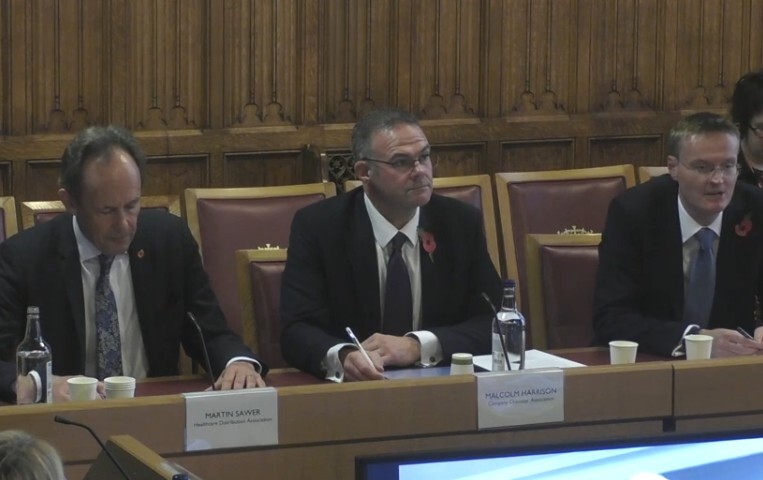
Pharmacies are increasingly dispensing medicines at a loss, with drug supply problems affecting one in five patients and pricing pressures distorting the market, pharmacy leaders have told a House of Lords inquiry.
Giving evidence to the Public Services Committee, James Davies, Community Pharmacy England (CPE) director of research and insights, said supply chain fragility was growing and highlighted a '£2bn funding deficit' in the sector.
'Pharmacies are now in a situation where they're often dispensing, supplying medicines, at a loss,' he said. 'They're having to purchase a medicine at a price where they're going to be reimbursed at a lower cost from the NHS.
'That's a real disincentive for them to hold extra stock to make sure that's available, or even to supply in the first place,' he added
Mr Davies said pharmacy teams were often only alerted to problems when stock could not be sourced, and that national tools for tracking shortages often lagged behind the situation on the ground.
Related Article: Warning issued over labelling error on osteoporosis medicine
'The Department of Health provides information through the SPS medicine supply tool, but sometimes that's a month or two later – by which time I've already had many patients coming through that I've had to deal with and try to prescribe alternatives for,' he said.
Mr Davies said Office for National Statistics data suggested around one in five patients were now experiencing issues accessing medicines from their pharmacy, even if the issue was later resolved.
He added: 'Ten years ago I would have kept a medication on the shelf for a patient. Now I wait until the prescription arrives and order it at the last minute because I can't afford to tie up the little cash flow I have in stock.'
Company Chemists' Association chief executive Malcolm Harrison told the committee that the retained margin system was failing to keep up with the realities of market conditions.
'It predicates on jeopardy,' he explained. 'On average there should be sufficient retained margin that every pharmacy can trade with – but what we're finding is that prices have been so suppressed that the room to buy better is eroding.'
He added: 'There's now a risk that manufacturers say it's no longer economically viable to supply the UK market and they withdraw – which leads to shortages, price spikes, and pharmacies making tough decisions about whether they can supply at all.'
Healthcare Distribution Association executive director Martin Sawer said the UK medicines supply chain was 'probably the envy of many countries' in terms of efficiency but warned it was being 'pared to the bone'.
'It's a private sector system with incredibly low margins,' he said. 'About 15% of the products we distribute make a profit, 85% don't – but it works as a basket. We are just about holding together on volume alone.'
Related Article: Antidepressant impacted by packaging error
Mr Sawer warned that economic and regulatory pressures were putting additional strain on the sector. He told the committee that 200-plus pharmacy direct debits were being cancelled each month and that wholesalers were often forced to ask for payment upfront – something he described as 'completely inefficient'.
He also raised concerns over Home Office delays in renewing controlled drugs licences, saying some sites had been forced to shut or relocate stock because they could not obtain a valid certificate. 'About 40% of our controlled drugs licences are currently dependent on an email from the Home Office,' he said.
Meanwhile, Royal Pharmaceutical Society (RPS) director for England Amandeep Doll emphasised the need for stronger government coordination, calling for a national medicines shortage strategy with clear guidance for pharmacy teams.
'Medicine shortages are not just a supply chain issue – they directly impact patient care and safety,' she said.
'Pharmacists are often the first to identify and respond to shortages, but they need better tools, clearer guidance, and stronger support to do so effectively.'
She urged the government to prioritise medicines security as a matter of national resilience and called for greater transparency and data sharing across the supply chain.
Related Article: Community pharmacies will be able to offer children flu vaccines
The other organisations also backed a more digitised and transparent supply chain. In addition, they said changes to NICE or local prescribing guidance were too often made without warning to the supply chain, and called for more consistent communication from manufacturers and the Department of Health and Social Care to reduce disruption.
Mr Harrison said the UK needed a more 'compelling' medicines market if it wanted to avoid further volatility. 'What builds resilience is competition,' he said.
'When the price is artificially suppressed, people leave the market – and that's when shortages happen.'


Have your say
Please add your comment in the box below. You can include links, but HTML is not permitted. Please note that comments are not moderated before publication and the views expressed are those of the user and do not reflect the views of The Pharmacist. Remember that submission of comments is governed by our Terms and Conditions. You can also read our full guidelines on article comments here – but please be aware that you are legally liable for any libellous or offensive comments that you make. If you have a complaint about a comment or are concerned that a comment breaches our terms and conditions, please use the ‘Report this comment’ function to alert our web team.