The rise of nitazenes: What pharmacists need to know
The spread of nitazenes into the recreational drug market has governments and experts seriously concerned and not just in the UK.
Now, a new ‘anti-drugs’ campaign has warned young people of the serious risks associated with taking ketamine, synthetic opioids or deliberately contaminated THC vapes.
It comes amidst growing concerns that synthetic opioids – particularly nitazenes – are increasingly appearing in counterfeit medicines sold illegally online.
These are typically being purchased by younger, more ‘drug-naïve’ people, the government has warned.
What are nitazenes?
Technically known as 2-benzyl benzimidazole opioids, nitazenes are a class of incredibly potent synthetic opioids that were discovered in the 1950s but never approved or marketed as medicines because of safety concerns.
They bind to the same receptors as morphine, heroin and fentanyl but with such potency that even tiny amounts can be fatal, with a high risk of accidental overdose.
In the past few years, nitazenes have become an increasing problem in Europe and the UK, partly as a result of a supply gap caused by the Taliban's prohibition on growing opium in Afghanistan.
Some of those detected in illegal drug supplies include butonitazene, isotonitazene, protonitazene and metonitazene. Etonitazene has been reported to be the most potent. Two new nitazene compounds were reported by the Advisory Council on the Misuse of Drugs (ACDM) in October.
Unlike heroin production, which requires poppy cultivation and processing, nitazenes are made in illicit laboratories using precursor chemicals, many of which originate from China, the National Crime Agency has warned.
Cheap to make - police uncovered the UK's first drug lab for nitazenes in Scotland earlier this year – traces of nitazenes are increasingly appearing in illegal drug supplies.
They have been sold as powders or nasal sprays and administered by the intravenous, sublingual or nasal routes or by vaping.
Most users would be completely unaware they’re consuming nitazenes, as they don't alter the appearance, taste, or texture of drugs.
Dr Caroline Copeland, director of the National Programme on Substance Use Mortality and a senior lecturer in pharmacology and toxicology at King’s College London explains that over the past year or so the risk has moved from being one specific to heroin users to a broader population.
Related Article: Deprescribing: The pharmacists' role in stopping inappropriate medications
‘It’s become very apparent that we're also seeing nitazenes in counterfeit tablets that are being sold as valium or diazepam in particular, also oxycodone as well.’
Rise in the UK
WEDINOS– the Welsh anonymous drug checking service – tests substances that have been sent from emergency departments, local health teams, substance misuse services, housing advice teams, night-time economy venues, festivals, criminal justice services and individuals across the UK.
From April 2024 to March 2025, a total of 110 samples were found to contain a nitazene, which the service noted had presented ‘an increasing public health challenge’.
The service – which cannot determine prevalence as it is self-selecting – first identified a nitazene in a sample from Wakefield in 2021.
In the past year, it has identified 13 different nitazenes from across the UK mainland up from eight the year before with metonitazene the most common having been found on 74 occasions.
‘They are found everywhere,’ Dr Copeland adds. ‘But there’s no way for people to tell [what’s in the drugs they are taking] because we don’t have in person drug checking services in the UK.’
In England and Wales last year, 5,565 deaths were reported related to drug poisoning – the highest number since records began. Nitazenes first appeared in death registrations in 2020. In 2023 the number of deaths involving nitazenes was recorded at 52, this figure almost quadrupled to 195 deaths 2024.
One report found that between June 2023 and May 2024, at least 284 deaths in the UK were linked to nitazenes.
The drugs have also been widely detected and implicated in overdose across Scotland, with public health officials warning that nitazene-type opioids are increasingly being identified in hospital and post-mortem toxicology. Between January and March 2025, nitazenes were detected in 38 deaths.
Yet all the official figures are likely to be an underestimate says Professor Amira Guirguis, professor of pharmacy at Swansea University Medical School and chief scientists at the Royal Pharmaceutical Society.
‘Nitazines are not routinely tested for in general clinical practice or post-mortem so the numbers are not really telling us the true size of the problem, because we don't necessarily look for them.’
Risk of overdose
Like other opioids, nitazenes produce effects on the central nervous system through binding to the mu receptor which leads to analgesic effects as well as euphoria and addiction.
Animal studies have suggested that isotonitazene would be expected to have an analgesic effect 500 times more powerful than morphine.
But all the nitazenes also have a far greater effect on respiratory depression than traditional opioids, causing breathing to slow, become shallow, or stop entirely.
Even in people who have built up tolerance to other opioids, a very small dose of nitazene can lead to overdose and death.
People unwittingly buy illegal products containing inappropriately high doses of nitazenes or by the nature of how they are blended or ‘cut’ with other substances buy drug products that contain ‘hot spots’ increasing the risk of unpredictable and severe opioid toxicity, the ACMD has warned.
Pharmacists do need to be able to recognise the signs of overdose, says Professor Guirguis.
‘It takes under a minute for an injected drug to injected opioid to start working,’ she says.
People will have loss of consciousness or severe drowsiness, very slow or shallow breathing or not breathing at all. They may also be making loud ‘snoring’ or gurgling sounds with pinpoint pupils, blue or grey lips or fingertips, cold, clammy skin and a low or irregular pulse.
Respiratory depression can also be exacerbated if the person has already taken CNS depressants, like alcohol or like any centrally acting drugs.
‘With milder toxicity, a person can also appear agitated, show anxiety, euphoria, dysphoria, paranoia, and hallucinations,’ Professor Guirguis adds.
Related Article: Grey-market peptides: what pharmacists need to know
The potency of nitazenes means that traditional harm reduction approaches like ‘start low, go slow’, while still important, may not provide adequate protection, explains Dr Copeland.
‘The “go slow” is difficult to adhere to with the nitazenes, because even the tiniest amount can be a fatal dose. So then the other advice of don't use alone and have access to naloxone becomes really important.
‘If anyone is at all suspicious that what they've got is not from their usual dealer or slightly different in quality, then both of those things are really, really important,’ she adds.
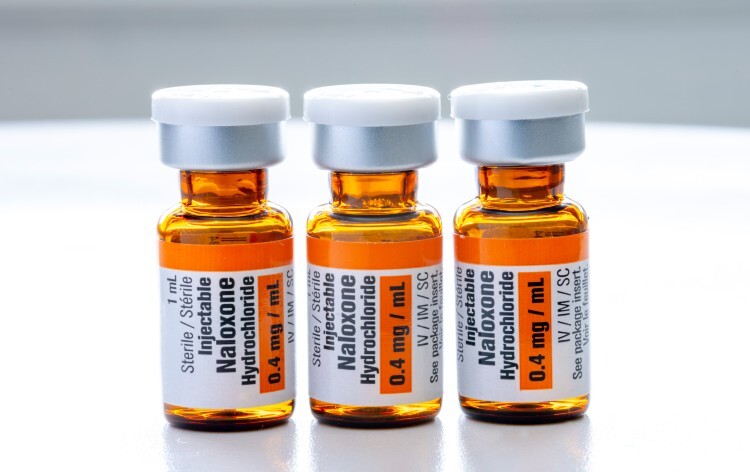
In response to the threat of nitazenes, local authorities and public health teams have ramped up efforts to provide naloxone kits to high-risk populations. As with other opioids, naloxone can reverse the effects of a nitazene overdose but due to its potency, multiple doses may be needed.
Addressing the problem
In January 2025, over 20 dangerous substances were banned, and a generic definition of nitazenes – classified as Class A under the Misuse of Drugs Act - was introduced into law to prevent manufacturers from creating analogues that bypass regulations.
Border Force dogs have been trained to detect nitazenes and fentanyl-making the UK the only country currently doing so - to intercept supplies before they enter the country.
But more also needs to be done on harm reduction, says Dr Copeland, and this is where community pharmacists have a role to play.
‘We’re never going to stop drugs coming in. The reward is so high for the risk that they're going to take, people are always going to supply and we have to accept that drug use is going to happen.’
There is work needed around education, she adds, but also making drug use safer, though initiatives like drug checking services.
Professor Guirguis agrees and says there is movement in this direction, with the first street drug checking service in Glasgow coupled with drug consumption rooms.
For pharmacists there is a lot they can do around education, she adds.
This includes talking to patients with a history of drug misuse about the risks – including those who are coming in for opioid substitution therapy – who may report using other drugs as well.
Crucially they need to ensure that those people have naloxone kits, that they know how to use it and that if they do have support such as a carer or a parent or a partner that they are also trained to administer it.
Related Article: Risks and responsibilities raised by Pharmacy First
‘Naloxone is really important, but given the potency of these drugs, it's important to understand that one dose might not work.’
She remembers seeing a patient in clinic who collapsed and they called an ambulance but by the time the paramedics had arrived they had given 14 naloxone doses. They were regaining consciousness in between and then losing it again, she explains.
‘It was very worrying. So people do need to be provided with harm reduction advice.’
Early intervention may be key, so spotting the signs of dependence. ‘Keep telling the patients there are some really nasty drugs on the market at the moment, so be careful.’
But pharmacies must be part of that integrated care and consider how they information and how they work with high-risk medication services, including when to refer.
‘There is a lot of stigma but drug misuse can happen anywhere and with anyone. Access to treatment is key, and community pharmacists are the most accessible healthcare professionals, and it is very important that we ensure that pharmacy teams are trained on this.’

Keep your clinical knowledge up to date with The Pharmacist
Extend your learning and record your learning outcomes
Have your say
Please add your comment in the box below. You can include links, but HTML is not permitted. Please note that comments are not moderated before publication and the views expressed are those of the user and do not reflect the views of The Pharmacist. Remember that submission of comments is governed by our Terms and Conditions. You can also read our full guidelines on article comments here – but please be aware that you are legally liable for any libellous or offensive comments that you make. If you have a complaint about a comment or are concerned that a comment breaches our terms and conditions, please use the ‘Report this comment’ function to alert our web team.