Interview: Obesity is a 'one-way road'
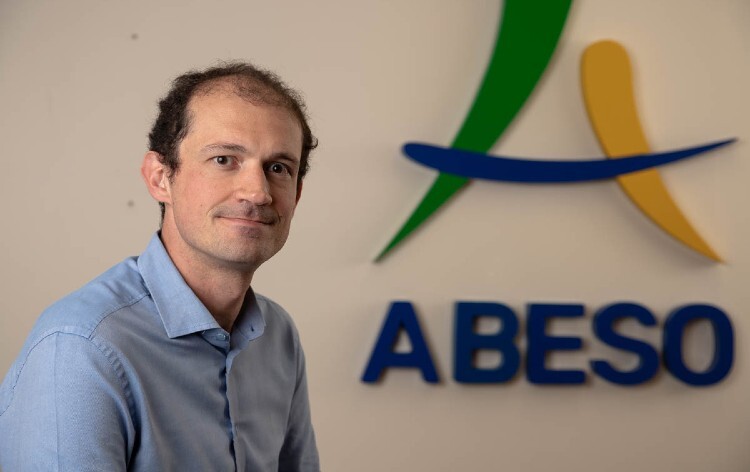
The World Obesity Federation projects that, without intervention, around 4 billion people will be living with overweight or obesity by 2035 – more than half the global population. As GLP-1 weight loss medicines reframe both the clinical and policy dimensions of the field as well as public attitudes, Dr Bruno Halpern, president-elect of the World Obesity Federation, reflects on the challenges and opportunities ahead in conversation with Cahal McQuillan.
Cahal McQuillan (CM): In the next 10 years, it’s estimated that half of the world population will be either overweight or obese — what do you think is driving that?
Dr Bruno Halpern (BH): I like a quote from Boyd Swinburn from [the University of Auckland] in New Zealand, who created the term obesogenic environment. He said that ‘obesity is a normal physiological response to an abnormal environment.’
We have lived for millions of years in an environment where it's much more common to have a lack of food than excess food. So, our genes evolved to that. Of course, the genes are not the same for everybody. So, there's people that are more genetically prone to gain weight and so on. But the genes, they are there.
In the 1970s, there was an increase in food production around the world. This is good on one side of course, but at the same time, it started the production of non-nourishing foods and ultra processed foods that you overeat, and they are high in calories and low in nutrients. There's good data right now that if you give the same nutrients under ultra processed foods or unprocessed foods, people tend to eat more ultra processed foods.
Of course, it’s not only ultra processed foods, because obesity is increasing even in countries that don't have them as much. But it's this environment. Food deserts, [for example], are very common in the United States – maybe less so in Europe. But the idea, that sometimes you are half an hour from a supermarket that sells unprocessed foods like vegetables and fruits is a major problem. [Especially], for those in lower socioeconomic conditions.
Depending on the neighbourhood you live, you have more or less risk of obesity. And that makes it clear that it is not an individual choice. It's not due to bad choices. It is related to socioeconomic status.
There's [also] a lot of discussion about physical activity, sedentariness and so on. When we look at the world, it's a very unfriendly environment for activity. There [are most likely] other reasons [as well], which we’re not sure about, such as medications used. We know endocrine disruptors, [for example], which are in substances like plastics, could also be obesogenic in some ways.
There's a lot that we need to learn about. But I think that one important point is that irrespective of what causes obesity, when you have obesity, it's a disease that's not going to disappear.
Even if something acute happened to you and you gained a lot of weight, generally, when you gain that, your body will try to maintain this weight. So those who get obesity, they don't leave obesity — and it's a one-way road, let's say it like that.
if you treat obesity correctly, you are going to reduce the risk of several other diseases
CM: Do you think that the excitement around weight loss medications has distracted in any way from prevention and policy measures?
BH: I don't think so. Quite the opposite actually. I think that obesity is being discussed more right now, and that's good for prevention.
When we think from a public health perspective, it's impossible to treat everybody in the world who lives with obesity. So, we are not changing the prevalence [of obesity by treatment alone].
[However], the discussion [that has been created by new weight loss medications] is not mature yet. There's a lot of discussion about weight loss, but not obesity treatment itself. Acute weight loss is just part of the treatment, but we should be thinking about the long-term weight maintenance and so on.
But, year by year, we are going to get to the point that those who live with obesity and lose weight and [maintain that reduction], can talk more about their experiences without so much stigma. [When that happens], we can discuss both prevention and treatment [equally].
What we cannot have is a competition that prevention is more important than treatment, or treatment is more important than prevention. We should work on both.
CM: Could you see some weight loss medications becoming lifelong treatments, in the same way that blood pressure medication has been taken long term?
BH: For those who have worked in the field, this is not something new. I worked for at least 15 years [on obesity]. And my family also worked in this area. We were always advocating for long-term treatment. What is new is this broader public perception that [long-term treatment] is a possibility.
In the past, we had treatments [in which most] patients were able to lose, about 5% of their weight. [While this] can have improvements for your health, it's not so clinically meaningful for the patient.
So, when we get to higher weight losses and benefits like improvements in comorbidities, it's much easier to accept that this is going to be [a lifelong treatment] because the benefits are very clear. I think that's the main change.
[There’s increasing] evidence that if you treat obesity correctly, you are going to reduce the risk of several other diseases, or if you already have those diseases, you're going to make it easier to treat them.
So, it's the idea of treat obesity first – let's treat obesity, and then you don't need to treat each comorbidity by itself. You can have one upstream treatment that can help a lot.
The vast majority of doctors learn about obesity from reading Vanity Fair or Vogue
CM: During NovoNordisk’s WeightTalk summit on World Obesity Day (4 March), you discussed the need for better obesity education for healthcare professionals. What do you think better obesity education should look like?
BH: [First of all], the information [that most] doctors know about obesity is [often the same as] what the general public knows. The vast majority of doctors learn about obesity from reading Vanity Fair or Vogue or similar.
One very interesting thing is that I have my social media in Brazil, where I give information about obesity. I have a lot of general-public followers, but also a lot of healthcare professional followers. Interestingly, I can give more or less the same information, and it's helpful for both groups.
I think this is a good example of how disconnected from real scientific knowledge most healthcare professionals are [in the context of obesity], because they receive the same information I give to the general public, and this [informs] their healthcare practice.
[So in terms of better obesity education for healthcare professionals], I think that it should be absolutely mandatory to have obesity classes in university, but not just one talk during the six-year programme. [Instead], for example, [you could have] one semester focusing on it when you are at the beginning of university and then come back to it in the final years. Not only for doctors, but for all healthcare professionals.
After finishing university, those who work in primary care need to be very well educated. Because, even if you don't treat obesity directly, you need to understand it. [We need to embed] this idea of treat obesity first and start thinking [about the fact] that in 10 years, half of the population will have overweight or obesity.
So, if I am a rheumatologist or orthopaedics that sees knee problems, [for example] and they are related to weight, I need to understand that obesity is a chronic disease. I need to refer the patient for good [obesity] treatment. [Instead], what happens now, is the doctor says, ‘Lose 20 kilos and return,’ as if that were an easy thing to do. So, we need this [to change], and we need continuous education.
World Obesity Federation has a programme that's called the Scope School that gives certification on obesity for healthcare professionals around the world, which can all [be done] virtually. It's a long programme and you get a certificate afterwards. Not only World Obesity Federation, of course, each country has its own programme. But it is a priority for us [at World Obesity Federation] to focus on good quality education and continuous education. We need to make it more popular.
Stigma is also very prevalent in the healthcare system. There's good evidence that patients who receive negative judgment during inpatient visits, tend to avoid going back to the doctor. So, sometimes [if those patients] have other problems, they don't want to go back because they know that the doctor will say, ‘Oh, you need to lose weight,’ – even when the complaint is not related to weight itself.
So, we need to focus on education [relating to] the physiopathology of obesity, its complications, how to treat it, but also on how to communicate better [and more respectfully] with patients, with respect.
I think that it should be absolutely mandatory to have obesity classes in university
CM: Is there any specific final advice you'd like to give community and practice pharmacist?
BH: I think that non-stigmatising language and actions, understanding the long term, and [not judging] those who are on treatment are all very important.
[But also] we need public spaces and healthcare spaces to be adapted for people with severe obesity. [Because] sometimes a patient with a BMI of 50 or 60, they don't go to doctors or to public spaces because they don't fit in the chair. So, we need to think more on that.

Keep your clinical knowledge up to date with The Pharmacist
Extend your learning and record your learning outcomes

Have your say
Please add your comment in the box below. You can include links, but HTML is not permitted. Please note that comments are not moderated before publication and the views expressed are those of the user and do not reflect the views of The Pharmacist. Remember that submission of comments is governed by our Terms and Conditions. You can also read our full guidelines on article comments here – but please be aware that you are legally liable for any libellous or offensive comments that you make. If you have a complaint about a comment or are concerned that a comment breaches our terms and conditions, please use the ‘Report this comment’ function to alert our web team.