Hantavirus: what pharmacists need to know
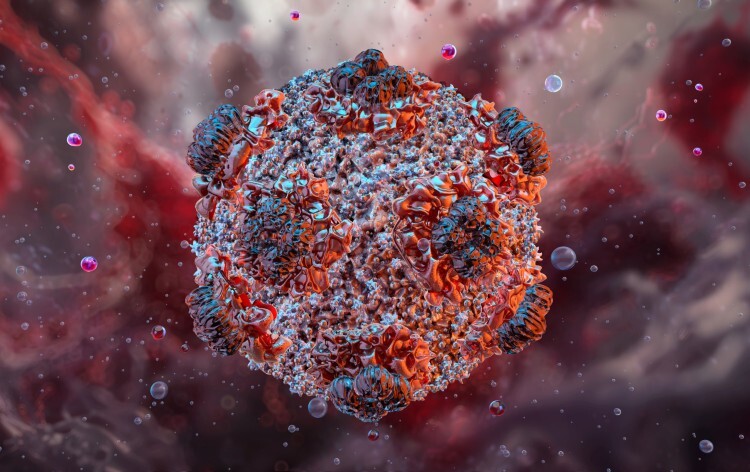
Hantavirus hit the headlines this week after an outbreak was reported on a cruise ship crossing the Atlantic Ocean.
We spoke with Dr Michael Head, an expert in public health research and epidemiology at the University of Southampton, about what pharmacists need to know about the virus, the outbreak, and what to do if there is a suspected case.
Outbreak
As of 5 May, there have been eight suspected cases of hantavirus infection – including three confirmed cases and three deaths – on the Dutch-flagged cruise ship called the MV Hondius, which departed from Argentina on 1 April.
The first patient – a 70-year-old man – fell ill on 6 April and died on 11 April. The body of the Dutch national was conveyed from the ship on 24 April in Saint Helena, where his wife also disembarked and flew to South Africa. She died two days later in a hospital in Johannesburg.
Before either of these deaths could be attributed to hantavirus, two other people on the cruise ship fell ill. One was evacuated to South Africa to receive treatment on 27 April and the other, a German woman, died onboard on 28 April.
It wasn’t until 2 May that hantavirus infection was confirmed in any patient. Following which the ship arrived in Cape Verde – 620 kilometres off the coast of Senegal – on 3 May and was asked to stay at sea as a precaution.
After spending three days anchored at the archipelago, the ship set sail towards Spain's Canary Islands on 6 May where the remaining passengers will be repatriated.
A total of 146 people from 23 different countries remain aboard the MV Hondius under strict precautionary measures, the cruise’s operator, Oceanwide Expeditions, said.
In a statement, the UK Health Security Agency (UKHSA) said: ‘The remaining British nationals can now be repatriated once the ship docks at its next destination if they do not develop symptoms. None of the British citizens onboard are currently reporting symptoms but they are being closely monitored.’
The Independent reported today that seven British people disembarked from the hantavirus-hit ship halfway through the cruise, with two said to be self-isolating at home in the UK.
Dr Meera Chand, deputy director for epidemic and emerging infections at UKHSA said: ‘It’s important to reassure people that the risk to the general public remains very low.
‘We are standing up arrangements to support, isolate and monitor British nationals from the ship on their return to the UK and we are contact tracing anyone who may have been in contact with the ship or the hantavirus cases to limit the risk of onward transmission.’
What is hantavirus?
Dr Head said: ‘Hantavirus is probably little known to the wider general public, but there are probably around 150,000 to 200,000 cases globally every year.’
Infections aren’t confined to any one part of the world, he said. While China tends to report the most cases, there are a small number of cases in the UK every year.
According to the European Centre for Disease Prevention and Control, hantaviruses are typically spread by rodents, such as rats.
There are several types of hantaviruses, and each hantavirus is associated with a particular type of rodent. People tend to get infected when they breathe in particles from infected rodent urine, droppings, or saliva. The incubation period is typically two to five weeks.
‘It is a very nasty pathogen’ Dr Head added. ‘The case fatality rate can be 20-50%, as we’ve seen with previous outbreaks’.
‘So the fact that people have died in this outbreak is tragic,’ he said, ‘but it’s also not necessarily surprising.’
What’s interesting and different in terms of the MV Hondius outbreak is the fact that possible human-to-human transmission has occurred.
Dr Head said that this is not unprecedented, ‘The Andes strain – which is the variant identified in this outbreak – is unusual in that there has been documented human to human transmission in the past.’
In an outbreak of the Andes strain of hantavirus in Argentina in 2018 and 2019, ‘There were 34 confirmed cases and 11 deaths,’ noted Dr Head.
‘Only three or four of the cases were known to have an initial environmental exposure, and then one or more of those cases subsequently infected other people. So human-to-human transmission has been seen before’
At the time of writing, according to the Associated Press, the leading theory for the origin of the outbreak, is that the Dutch couple, who were the first to fall ill, could have contracted the virus during a bird-watching outing in the city of Ushuaia before boarding the ship. It is suggested that they then infected the others during the cruise. But this has not been confirmed.
Threat to the UK
As previously mentioned, hantavirus already exists in the UK. However, only Seoul hantavirus, which does not transmit person to person, has ever been identified in the UK.
Since 2012, 11 confirmed human cases of Seoul hantavirus infection have been reported in the UK, with nine linked to pet rats or rats bred for reptile feeding.
When asked if the Andes strain could become established in UK rodent populations, Dr Head said: ‘Rats are mobile. They can get on planes and boats and go to other continents. So, there is a theoretical risk’
But he noted: ‘The risk of the Andes virus becoming imported and sustained in the UK is extremely low I would think.’
‘The Andes hantavirus would need to establish as host in the rats here, and it might also need some kind of competitive advantage to outweigh the Seoul hantavirus in order to become the dominant strain. So, the risk to somebody based in the UK, is as close to zero as it gets.’
‘If you're a close contact to those on board the ship, then there are certainly greater concerns, but beyond that environment, there is little reason to be concerned for the wider general public.’
Suspecting a case
As many as seven British people disembarked the MV Hondius before it was quarantined and, according to a BBC report, a huge operation is currently underway to trace people potentially exposed to the virus who have already taken flights home to numerous countries, including the UK.
For healthcare providers who suspect a case in someone, the UKHSA lists the following symptoms as being linked with hantavirus infection:
- Fever
- Extreme fatigue
- Muscle aches
- Stomach pain
- Nausea
- Vomiting
- Diarrhoea
- Shortness of breath
Dr Head highlighted that these overlap with many common viral illnesses.
‘The symptoms, across many respiratory diseases are often similar to each other. They might start with a fever, maybe you might get some nausea or vomiting, you might get coughing.
‘With hantavirus, there is quite a sudden onset to severe disease, and it can happen quite quickly where that difficulty in breathing increases, and where fluid starts to get into the lungs.’
‘So, in relation to this specific hantavirus outbreak, I think travel history is going to be a key one for clinicians to keep an eye out for.’
‘But,’ he added, ‘if there was some kind of environmental behaviour that could have involved exposure to rats and their droppings, then that again could be a diagnostic clue for clinicians as well. And also, occupational exposures or social exposures.’
If a case is suspected, Dr Head stated that hantavirus is a notifiable disease, so healthcare professionals would need to report it to the appropriate public health authorities – the UKHSA.
After that, diagnosis is usually made via polymerase chain reaction (PCR) testing, there is no antiviral available to treat the infection and clinicians are only able to provide ‘what's known as supportive care’, said Dr Head.

Keep your clinical knowledge up to date with The Pharmacist
Extend your learning and record your learning outcomes
Have your say
Please add your comment in the box below. You can include links, but HTML is not permitted. Please note that comments are not moderated before publication and the views expressed are those of the user and do not reflect the views of The Pharmacist. Remember that submission of comments is governed by our Terms and Conditions. You can also read our full guidelines on article comments here – but please be aware that you are legally liable for any libellous or offensive comments that you make. If you have a complaint about a comment or are concerned that a comment breaches our terms and conditions, please use the ‘Report this comment’ function to alert our web team.