Interview: A virologist on the early flu season and why vaccination matters
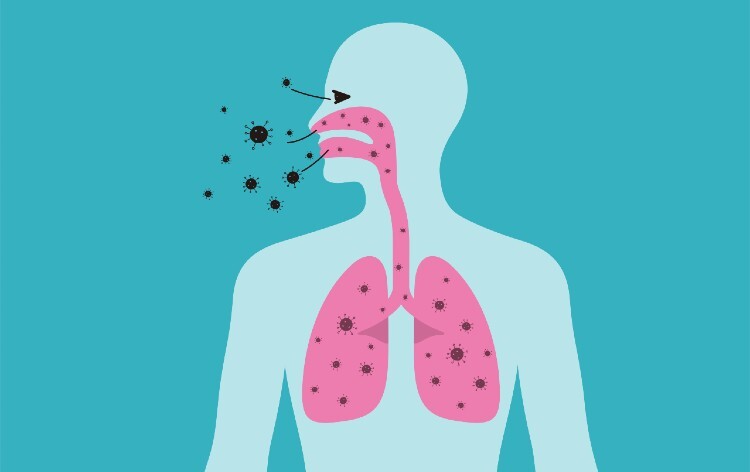
This year’s flu season is off to an ‘unusually early start’, according to latest surveillance figures from the UK Health Security Agency (UKHSA). The Pharmacist’s Emily Warner sat down with Dr Phillip Gould, a virologist at Coventry University, to find out why.
Emily Warner (EW): Why has flu season started earlier than usual this year?
Dr Philip Gould (PG): We have seasonal flu because the flu virus circulates across the globe. The flu strains that are circulated in the Southern hemisphere – typically Australia – will evolve and change slightly through their winter season and then move across the globe and enter the norther hemisphere. Normally, we’d start to see an increase in cases in a month’s time, but that’s happening earlier [this year].
The overall levels of flu virus circulating in Australia were slightly higher than normal, so there’s an increased chance of the virus moving earlier – that is what people think is happening. Not all respiratory viruses are peaking earlier so it also seems to be unique to flu. [The early flu season] could also be down to the fact that Australian vaccination rates were lower this year.
Related Article: Beyond the scales: reframing eating disorder recognition in primary care
EW: Is the flu virus going to be worse this year because it started earlier?
PG: It is too early to tell. The flu virus has started early, but the gradient of how it’s increasing now it’s become established doesn’t look any different to previous years.
EW: Would you expect the flu season to end sooner because it starter earlier?
PG: That’s a little difficult to predict. If it starts earlier, it may finish earlier but the peak may also last for longer and affect more people. Viruses tend to follow a bell-shaped curve, with the exception of Covid where it just extended because everyone was naïve and we didn’t have a vaccine. So, if the flu season does finish early, then that’s a positive sign but the government’s vaccine strategy is based on the virus starting later, so less people will be vaccinated at this point, and the peak could be higher.
EW: Should the government reconsider the timing of their vaccination programmes?
PG: Flu is interesting because we have to make a new vaccine every year and the earlier manufacturers start making it, the less effective it will be. This is because the flu virus changes very subtly every time it replicates through someone – a process called antigenic drift. If, in five years’ time, flu season is consistently starting earlier say mid-September then that time point when they make that decision on the vaccine strain composition will need to be earlier and it would require a big shift across the globe to change that starting point to get enough vaccines made.
My research is working out how we can reduce the manufacturing time which will allow more flexibility for manufacturers to make sufficient doses in a shorter window and in this instance start vaccination earlier without moving that window earlier in the strain selection (the viruses that are used to make the vaccine that are circulating).
Related Article: Sharp rise in diabetes cases prompts call for better postnatal support
EW: How are vaccines manufactured?
PG: Flu vaccine is made mainly in fertilised chicken eggs. The manufacturers will inject a very small amount of virus into the fertilised egg, and the white part of the egg will grow lots of the virus which is then used to make the vaccine. Every egg can make about one or two doses of vaccines so it’s quite an intensive product to produce, but it’s still much cheaper than the mRNA type of vaccines.
EW: Why is flu vaccination important and how can pharmacists incentivise patients to get vaccinated?
PG: Vaccination is important because it prompts your immune system to recognise a virus or pathogen so that you can have a much quicker immune response. The idea is, the more people who are vaccinated, the lower the chance the virus can infect someone else. So, getting vaccinated is not only about protecting yourself but also protecting those around you.
In modern society, people want ease. They want very quick appointments for things like the flu vaccine, so it’s all about the publicity of pharmacists and how they can promote that service.
Related Article: Novo Nordisk launch new 7.2mg single-dose Wegovy pen
EW: If more people get vaccinated, does the virus have fewer opportunities to mutate, making the next round of vaccines in Australia more effective?
PG: Yes, in theory. If your immune system is ready and prepared for the virus, and stops it from replicating, there should be less chance of new mutations occurring. But it’s all about probability and chance. The virus could infect 500 people and by chance, create a new version that is more infectious; or it could infect the whole of the UK and remain exactly the same.

Keep your clinical knowledge up to date with The Pharmacist
Extend your learning and record your learning outcomes

Have your say
Please add your comment in the box below. You can include links, but HTML is not permitted. Please note that comments are not moderated before publication and the views expressed are those of the user and do not reflect the views of The Pharmacist. Remember that submission of comments is governed by our Terms and Conditions. You can also read our full guidelines on article comments here – but please be aware that you are legally liable for any libellous or offensive comments that you make. If you have a complaint about a comment or are concerned that a comment breaches our terms and conditions, please use the ‘Report this comment’ function to alert our web team.