NHS childhood vaccination programme expands to include chickenpox
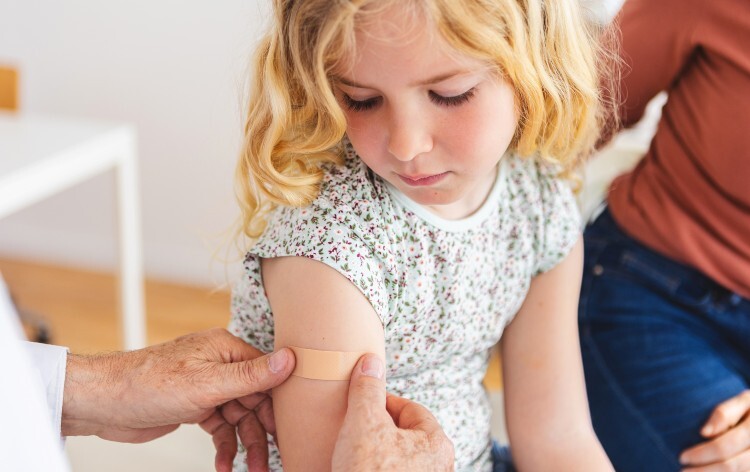
GP practices will begin offering vaccination against chickenpox as part of an expanded NHS childhood vaccination programme from 2 January 2026.
The move has been described by health and social care secretary Wes Streeting as a ‘historic milestone’ in protecting children’s health.
Since Friday 2 January, GP practices will start to offer a combined MMRV vaccine at 12 months and 18 months of age to add chickenpox (varicella) to the protections against measles, mumps and rubella.
NHS England said the initiative would see ‘hundreds of thousands’ of families with young children be offered protection against chickenpox and that it is expected to save the NHS £15m a year in costs for treating the condition.
The routine schedule will now see:
Related Article: Research review: a look at the latest clinical papers
- Children born on or after 1 January 2025 will be offered two doses of the MMRV vaccine at 12 months and 18 months, while children born between 1 July 2024 and 31 December 2024 will be offered two doses at 18 months and three years, 4 months.
- Children born between 1 September 2022 and 30 June 2024 will be offered one dose at three years 4 months.
- Plans are also underway for a single-dose catch-up programme for later in the year for older children born between 1 January 2020 and 31 August 2022.
- Two doses of the MMR vaccine were previously offered to children at 12 months and at three years, 4 months of age but the second dose will be brought forward to 18 months for children born on or after 1 July 2024 to provide them with earlier protection.
Dr Claire Fuller, national medical director for NHS England, said: ‘This is a hugely positive moment for children and their families, providing protection against chickenpox for the first time and adding to the arsenal of routine vaccinations we give to children to safeguard them against serious illnesses.’
She said the move would also ‘help the health service move its focus from sickness to prevention, and keep more children safe and in school’.
Latest government data suggests that half of children will contract chickenpox by the age of four, and 90% by the age of 10.
Dr Gayatri Amirthalingam, deputy director of immunisation at the UK Health Security Agency explained that for some babies, young children and adults, ‘chickenpox can be very serious, leading to hospital admission and tragically, while rare, it can be fatal’.
‘Beyond the health risks, chickenpox also places a significant burden on families. Parents often need to take time off work to care for their sick child, and children miss valuable time at school or nursery,’ she added.
‘With a vaccine now being introduced into the NHS childhood vaccination programme, I hope parents will make it one of their new year resolutions to ensure their child takes up the offer, when invited. As the vaccine is a combined vaccine with MMR, your child will be protected against four serious diseases – measles, mumps, rubella and chickenpox.’
She said the vaccine had been used ‘extensively for many years in a number of countries and has been shown to be highly effective with a good safety profile’.
‘The programme will have a really positive impact on the health of young children,’ added Dr Amirthalingam.
Related Article: Seven illnesses meningitis is often mistaken for
NHS England said the combined MMRV jab has been ‘safely used for decades’ and is already part of the routine vaccine schedules in several countries, including the United States, Canada, Australia and Germany – which have ‘all seen substantial decreases in cases and related hospital admissions since introducing their vaccination programmes’.
Health secretary Mr Streeting added that it marks a historic milestone in protecting children’s health.
'For the first time, the NHS is offering chickenpox vaccination as part of our routine childhood immunisation programme.
‘Many families have faced the threat of chickenpox, which can cause serious complications. The disease also brings significant worry and disruption, with children missing nursery or school and parents forced to stay home to look after them.
‘This new protection will give parents reassurance that their children are protected from a disease that sends thousands to hospital every year.
‘Families will save both time and money – no longer facing lost income from taking time off work or having to fork out for private vaccinations.’
Related Article: MenB vaccination programme to be rolled out in pharmacies
At the end of last year, the government issued guidance for parents and carers of children to help them understand the introduction of the new combined MMRV vaccine.
Meanwhile, key information on the implementation of a new chickenpox vaccination programme – including eligibility, funding and vaccine supply – was released by the government in November 2025.
The article was originally published in our sister publication Nursing in Practice.

Keep your clinical knowledge up to date with The Pharmacist
Extend your learning and record your learning outcomes
Have your say
Please add your comment in the box below. You can include links, but HTML is not permitted. Please note that comments are not moderated before publication and the views expressed are those of the user and do not reflect the views of The Pharmacist. Remember that submission of comments is governed by our Terms and Conditions. You can also read our full guidelines on article comments here – but please be aware that you are legally liable for any libellous or offensive comments that you make. If you have a complaint about a comment or are concerned that a comment breaches our terms and conditions, please use the ‘Report this comment’ function to alert our web team.