Managing contraception and HRT prescribing in patients on weight loss medication
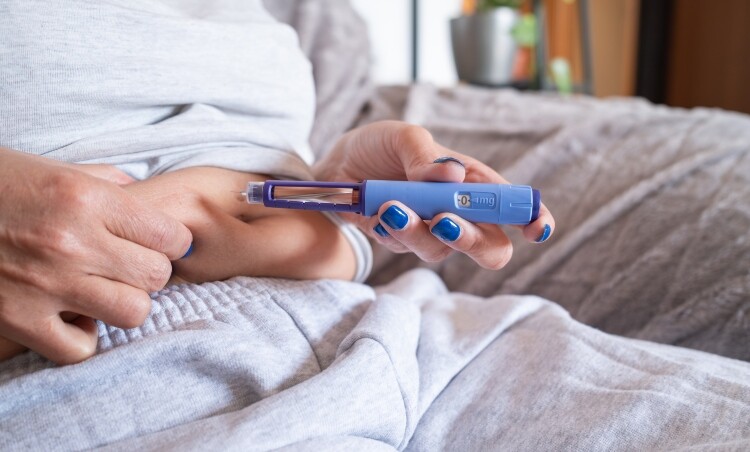
GP Dr Toni Hazell discusses the recent rise in the use of injectable GLP-1 agonist weight loss drugs and the challenges this can create when prescribing contraception or HRT
GLP-1 agonists aren’t widely available on the NHS, so why is this a big issue?
The world of weight loss has been transformed by the arrival of glucagon-like peptide 1 (GLP-1) receptor agonists, like semaglutide, and the dual GLP-1 and glucose-dependent insulinotropic polypeptide (GIP) receptor agonists such as tirzepatide. For brevity, we will use the term ‘GLP-1 agonist’ to discuss both classes of drug.
NICE guidance recommends prescribing of tirzepatide in primary care at a BMI ≥35 kg/m2 with one weight-related co-morbidity, although the NHS in England is not likely to meet that goal for another 12 years, with a much more restrictive initial criteria of a BMI ≥40 kg/m2 and four out of a list of five co-morbidities. Other GLP-1 agonists used for weight loss are only prescribed on the NHS by specialist services.
GLP-1 agonists are nonetheless increasingly widely prescribed in primary care, in particular in the private sector, so it is important to be aware of any potential interactions when prescribing other drugs. Both hormone replacement therapy (HRT) and contraception, very commonly prescribed and reviewed by pharmacists in primary care, are potentially affected by GLP-1 agonists.
Of note when GLP-1 agonists are prescribed privately this may be done with no face-to-face interaction, followed by a brief letter to the GP to inform them that their patient is taking this medication.
Related Article: Record numbers join NHS ‘soups and shakes’ programme
It is sensible in this case for the patient’s GP practice to add the GLP-1 prescription to the computer screen as ‘hospital issue’, as this will pick up possible interactions. Some GP practices have chosen to send a text message to any woman taking a GLP-1 asking them to arrange a review if they are taking oral contraception, as it may need to be changed.
What are the risks for someone using a GLP-1 agonist and oral contraception?
We know that weight loss can improve fertility – it is often recommended either to meet the criteria for fertility clinic referral, or to improve the chances of natural or assisted conception being successful. However, there is a specific issue for women who are taking tirzepatide and who are relying on oral contraception to prevent pregnancy.
These are new drugs and we don’t therefore have a large amount of clinical data to look at, but there are pharmacokinetic studies which raise concerns. Tirzepatide (but not semaglutide) has been shown to have the following effects on oral contraception, which were not seen for semaglutide, or any of the less commonly used GLP-1 agonists. These will all act to reduce contraceptive efficacy.
- Reduce the area under the curve (AUC) which represents the total drug exposure over time.
- Increase the Tmax (the time taken to reach maximum plasma concentration).
- Reduce the Cmax (peak concentration of the drug in the bloodstream).
It is always particularly concerning if a woman gets pregnant whilst taking a new drug, where we don’t have years of case reports about use in pregnancy. The high molecular mass of GLP-1 agonists suggests that transfer across the placenta wouldn’t be expected, but given the lack of knowledge, women using them for weight loss (who do not have diabetes) are advised to stop before trying to conceive. Those using them for diabetes should discuss all of their medication with their clinician before trying to conceive.
In light of these findings, the College of Sexual and Reproductive Healthcare (CoSRH) advises that women switch to a non-oral or barrier method of contraception for four weeks after initiation of tirzepatide, and four weeks after any dose change. After four weeks some tolerance builds up, so that the slowdown of gastric emptying and reduction in absorption isn’t as pronounced.
A washout period should also be observed between taking the last dose of a GLP-1 agonist and trying to conceive – this is one month for tirzepatide, two months for semaglutide and 12 weeks for exenatide. They also should not be used when breastfeeding, again due to a lack of safety data rather than any positive data about harm.
Note that, for pharmacists prescribing contraception as part of the NHS Pharmacy Contraception Service, the Patient Group Directions (PGDs) for combined oral hormonal contraceptives and progestogen only pills now include guidance on GLP-1 agonists and refer pharmacists to the CoSRH website for advice.
There is also a requirement to provide the CoSRH patient information leaflet to patients as part of oral contraception consultations if the person is using or planning to use a GLP-1 agonist.
Related Article: Contraception service gets a boost ahead of October expansion
What about emergency contraception?
The CoSRH guidance states that there is no direct evidence or pharmacokinetic data regarding the effect of GLP-1 agonists on emergency hormonal contraception. It reminds prescribers that the copper intrauterine device is the most effective method and should be offered where appropriate, and that if prescribing the levonorgestrel emergency contraceptive pill then a double dose should be considered in patients with BMI >26 kg/m2 or weighing over 70kg.
What are the issues around GLP-1 agonists and HRT?
HRT is widely prescribed in primary care and women with obesity are most likely to be using a transdermal (TD) form of oestrogen, which will not be affected by a GLP-1 agonist. TD oestrogen does not increase the risk of venous thromboembolism (VTE) and is therefore recommended for all women with an increased background risk of VTE, including a BMI ≥30 kg/m2. Women who have not had a hysterectomy need to combine the oestrogen in HRT with a progestogen; unopposed oestrogen carries a significant risk of endometrial hyperplasia and cancer, both of which are conditions for which obesity is also an independent risk factor.
Women taking a combined patch (or TD oestrogen with a levonorgestrel intrauterine device as their progestogen) are also unaffected by the use of a GLP-1 agonist, as the entire regime is non-oral; the same would apply to a woman using a combined oral preparation, as any reduction in efficacy would apply equally to the oestrogen and the progestogen and so not increase the risk of endometrial proliferation. It is possible that the latter group might find a reduction in the efficacy of their HRT when using tirzepatide (for the same pharmacokinetic reasons discussed regarding contraception), but the likelihood and magnitude of this is unknown.
The group at risk of endometrial hyperplasia are those women using a GLP-1 agonist and also using TD oestrogen (which will be unaffected by the GLP-1 agonist) and an oral progestogen, as the absorption of the progestogen may be reduced while the oestrogen stays the same, leaving the woman with an unbalanced regime and an insufficient amount of progestogen to protect her endometrium from the oestrogen.
The British Menopause Society has made the following recommendations for this cohort, emphasising that data is notable by its absence:
Related Article: Supporting patients on weight loss medications: a practical guide for pharmacists
- Women using a GLP-1 agonist should ideally use a non-oral form of progestogen alongside their TD oestrogen.
- Where they prefer to continue with an oral progestogen, they should be informed of the lack of data to inform any dose adjustment.
- A potential approach is to increase the dose of the oral progestogen for four weeks after starting a GLP-1 agonist, and after every dose increase until a stable dose is reached.
- In the event of unscheduled bleeding, it may be wise for this to be investigated earlier than suggested in national guidance in women using a GLP-1 agonist.
The BMS guidance does not say by how much the dose of oral progestogen should be increased – a document published by the Primary Care Women’s Health Society suggested that a pragmatic approach would be to use the same increases as for women taking a higher than usual dose of oestrogen, but also pointed out that the lack of data to guide this and emphasised that the levonorgestrel intrauterine device gives the best endometrial protection and should be recommended in this situation.
Dr Toni Hazell is a GP in north London
Sources and further reading
- Tirzepatide for managing overweight and obesity. [TA1026]. Sept 2025
- Glucagon-like peptide-1 (GLP-1) agonists and oral contraception. Feb 2025
- Use of GLP-1 receptor agonists in pregnancy. July 2024
- GLP-1 medicines for weight loss and diabetes: what you need to know. Aug 2025
- Use of incretin-based therapies in women using hormone replacement therapy (HRT). April 2025
- Injectable weight loss drugs, contraception and HRT – summary with practical action plan. April 2025
- NHS England. NHS Pharmacy Contraception Service. Service specifications and PGDs. Updated October 2025
A version of this story first appeared in sister title Pulse.
Sources and further reading
- Tirzepatide for managing overweight and obesity. [TA1026]. Sept 2025
- Glucagon-like peptide-1 (GLP-1) agonists and oral contraception. Feb 2025
- Use of GLP-1 receptor agonists in pregnancy. July 2024
- GLP-1 medicines for weight loss and diabetes: what you need to know. Aug 2025
- Use of incretin-based therapies in women using hormone replacement therapy (HRT). April 2025
- Injectable weight loss drugs, contraception and HRT – summary with practical action plan. April 2025

Keep your clinical knowledge up to date with The Pharmacist
Extend your learning and record your learning outcomes

Have your say
Please add your comment in the box below. You can include links, but HTML is not permitted. Please note that comments are not moderated before publication and the views expressed are those of the user and do not reflect the views of The Pharmacist. Remember that submission of comments is governed by our Terms and Conditions. You can also read our full guidelines on article comments here – but please be aware that you are legally liable for any libellous or offensive comments that you make. If you have a complaint about a comment or are concerned that a comment breaches our terms and conditions, please use the ‘Report this comment’ function to alert our web team.