Revealed: How ICBs are taking their own approaches to Mounjaro prescribing
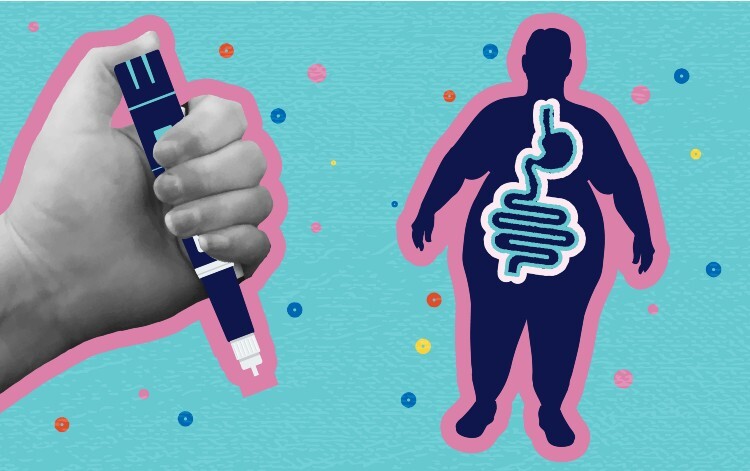
It was one of the biggest health stories of last year. In June 2025, GPs were given the go ahead to start prescribing tirzepatide (Mounjaro) for obesity. While it has been available since 2022 as a treatment for diabetes, this new indication arrived in a blaze of glory, making front pages, and being described as a ‘game changer’ in the fight against obesity by health secretary Wes Streeting.
There were warnings, too. One Oxford review found that people regain weight faster after stopping weight loss drugs than they do after ending a diet. Healthcare professionals were reminded to flag the side effects of weight loss jabs to patients - ranging from nausea to more serious complications like pancreatitis and vision loss. Women were warned to take effective contraception alongside their GLP-1 medication due to limited safety data about the medicines’ effect on a baby.
Despite these caveats, experts said weight loss drugs would transform the lives of people with obesity - particularly those who were experiencing severe ill health as a result. Their main concern was not side effects or weight regain, but how few patients would benefit.
At the time, experts said growing demand for weight loss medication risked going beyond what was clinically deliverable. Rationing at a national level - the result of squeezed NHS budgets - would limit its potential impact and may even push people into using unregulated online providers.
Now an investigation by The Pharmacist - analysing OpenPrescribing data and data obtained from a freedom of information (FOI) request sent to all 42 ICBs - reveals that not only are the national thresholds limiting the eligible numbers, but ICBs are imposing their own, even stricter, eligibility criteria.
In some areas, this involves excluding patients with unstable mental illness; in others it prioritises those from more deprived areas. One ICB is set to require patients to undergo supported attempts to lose weight ahead of being prescribed tirzepatide.
As well as this, there are clear differences in spend across the country, with deprived areas spending the most. Meanwhile, NHS spending on tirzepatide has risen by up to 200% since GPs were first able to prescribe it.
Professor John Wilding, head of clinical research into obesity, diabetes and endocrinology at the University of Liverpool, tells The Pharmacist that this increases the risk of inequalities in access across different parts of the country.
'One reason NICE was set up was to stop ‘postcode’ variations in access to treatments. These often ill-considered and arbitrary local decisions undermine the whole point of national criteria and are very unfair to people living with obesity,' he added.
Regional variation
ICBs are required to meet the costs of funding access to tirzepatide in primary care, alongside other available treatment options, to patient cohorts on a phased basis.
Under the national criteria, the first cohort of patients who are eligible for tirzepatide on the NHS must have a BMI over 40 and four or more weight-related comorbidities such as hypertension, sleep apnoea, dyslipidaemia or cardiovascular disease.
The second cohort to be prescribed tirzepatide must have a BMI of 35 – 39.9 and four or more comorbidities; the third cohort must have a BMI over 40 and three or more comorbidities.
Graham Thoms, CEO of PharmaDoctor, said that the NHS patient eligibility criteria is 'so restrictive that the majority of patients who could benefit from treatment do not qualify.'
However, it is not just national thresholds that are an issue. From the beginning there was regional variation, with our sister publication Pulse revealing that rollout of tirzepatide was being delayed in some ICB areas.
Related Article: Beyond the scales: reframing eating disorder recognition in primary care
The Pharmacist investigation now reveals that ICBs are treating these thresholds as a minimum - with many imposing even stricter ones.
Greater Manchester ICB has applied ‘local prioritisation’ within cohort one by dividing it into three sub-cohorts (1a, 1b, 1c). The aim is to prioritise patients with the highest clinical needs and support financial sustainability.
It said: ‘The scale of demand means that treatment cannot be delivered to all eligible patients at once. All patients who meet NHS England eligibility criteria will be considered for treatment as implementation progresses.’
Meanwhile, Humber and North Yorkshire ICB’s primary care weight management service has a list of exclusion criteria including:
- Any patient with unstable/uncontrolled: alcohol/drug use, hypothyroidism, Cushing’s syndrome, mental illness;
- Personal or family history of medullary thyroid carcinoma and in those with multiple endocrine neoplasia syndrome type 2;
- Patient has been diagnosed with an eating disorder;
- Patient has undergone bariatric surgery in the past 12 months;
- Patient has been discharged from a Tier 3 weight management programme within the last 2 years at the time of referral.
The ICB commented: ‘The additional exclusion criteria within Humber and North Yorkshire’s primary care weight management service are not about rationing or cost, but about ensuring patient safety and making sure people are directed to the most suitable support for their individual circumstances.
‘Some conditions – such as unstable mental illness, recent bariatric surgery or certain endocrine disorders – require more specialist assessment or alternative pathways of care. In these cases, tirzepatide may not be the safest or most effective option, or patients may already be receiving specialist support.’
In Lancashire and South Cumbria ICB, only patients who live in one of the most deprived areas – according to the government’s indices of multiple deprivation – are eligible for tirzepatide.
‘The NHS has an obligation to commission services equitably, ensuring fair access to health support for those most in need. As NHS funds are limited, we are targeting this support initially at those from the most deprived areas of the region,’ it added.
NHS South Yorkshire ICB will apply the same thresholds for treatment to cohort one but for future cohorts, ‘patients will be required to have completed, in the last 24 months, a supported attempt to lose weight prior to consideration of weight loss drugs’, it said in an FOI response.
This is having a huge effect on the number of patients receiving treatment across the country. Around 220,000 people in England are expected to qualify for tirzepatide over three years - around 37 in every 10,000 people. Yet The Pharmacist’s investigation reveals that only a fraction of these are receiving medication through their ICB, with regional variations.
The investigation reveals the numbers of patients prescribed tirzepatide following GPs being allowed to prescribe:
- North East and North Cumbria ICB: 895 (2.77 per 10,000 people);
- Bristol, North Somerset and South Gloucestershire ICB: 268 (2.45 per 10,000 people as of 7 January 2026);
- Hertfordshire and West Essex ICB: 107 (0.64 per 10,000 people as of 15 December 2025);
- North East London ICB: 68 (0.28 per 10,000 people as of 9 January 2026).
Professor Wilding at the University of Liverpool, says that funding had been 'extremely restricted' in his local ICB, Cheshire and Merseyside - including in its specialist service for obesity - meaning that very few patients had been prescribed weight loss medicines so far.
ICB spending
Underpinning all these differences are ICB budgets. Director of the NHS Confederation’s Integrated Care Systems Network, Sarah Walter, says: ‘The ongoing savings ICBs are being required to make means they are between a rock and a hard place.
‘While they are seeking to make progress on priorities, including tackling health inequalities, they also need to meet NHS England’s requirements about balancing the books.’
She adds that the NHS Confederation is working with ICBs on a longer-term project to improve weight management service pathways, to ensure patients can access the support they need.
The Pharmacist investigation reveals that an estimated £325m has been spent on tirzepatide since it was approved for weight loss.
GPs have been allowed to prescribe tirzepatide for the treatment of obesity since 23 June 2025, having been available in NHS specialist weight management services for obesity since 24 March 2025. Although the data does not differentiate between tirzepatide prescribed for type 2 diabetes – which it was licensed for in October 2022 – and weight loss, the increase is clear (see graph). The amount of money spent on tirzepatide by North East and North Cumbria ICB almost tripled from June to September 2025, and most ICBs – including the lowest spenders – saw an upward trend throughout the last year.
There is also variation in spending between ICBs. The Health Foundation, in collaboration with online weight management provider Voy, recently analysed 113,630 patients who received a private GLP-1 prescription between November 2024 and October 2025.
The findings showed that people in the most deprived areas were accessing 32% fewer GLP-1 prescriptions than those in the least deprived. People in more deprived areas also tended to start treatment at a higher BMI, suggesting later intervention and a greater accumulation of health risks before treatment begins.
It concluded: ‘Unless NHS availability explicitly counterbalances this skew, the health life expectancy gap is likely to persist or even widen, even if there are overall population health gains.’
Our findings suggest that this does seem to be happening. The NHS has spent the most on GLP-1s (incorporating diabetes and obesity spending) in Leicester, Leicestershire and Rutland ICB, Cornwall and the Isles of Scilly ICB, and Northamptonshire ICB, paying out almost £250,000 per 10,000 people between April and November last year.
Related Article: Sharp rise in diabetes cases prompts call for better postnatal support
Meanwhile Hertfordshire and West Essex ICB, Derby and Derbyshire ICB, and Dorset ICB were the lowest spenders, having only paid out around £60,000 per 10,000 people between them.
Professor Azeem Majeed, head of the department of primary care and public health at Imperial College London, says: ‘'These areas [that are spending the most on tirzepatide] have some of the highest levels of obesity, type 2 diabetes and socioeconomic deprivation in England, meaning there is a larger pool of people who meet the eligibility criteria set by NICE.’
These areas may also be earlier adopters of tirzepatide prescribing on the NHS. Professor Majeed adds: 'Identifying eligible patients, carrying out detailed consent discussions, monitoring side-effects and reviewing responses at six months are all time-consuming.
'In many areas this will need dedicated commissioning and resourcing, rather than being absorbed into already overstretched routine primary care.'
Even though ICBs do seem to be counterbalancing issues around deprivation, the single most important factor in the prescribing of the drug is the pricing. NHS modelling shows that even in the first year, if all eligible people came forward and seven in 10 started tirzepatide, the cost would reach £3.1bn.
In addition, the drug manufacturer Eli Lilly announced a major price hike for Mounjaro which came into effect on 1 September last year. This saw the price for a monthly supply of the lowest dose of Mounjaro (2.5mg) stand at £133 – a 45% increase.
It was decided that NHS prescriptions for Mounjaro would be reimbursed at the increased UK prices, and Eli Lilly offered a ‘Mounjaro rebate scheme’ to all pharmacies providing private weight management services.
The differing thresholds imposed by ICBs mean patients across England face unequal access to NHS-funded weight loss medication, with many turning to private prescriptions, going into debt, or giving up altogether, according to Healthwatch.
Dr Bryony Henderson, medical director for MedExpress - one of the biggest private providers of weight loss jabs - said these findings highlight ‘the immense challenge the NHS faces in balancing unprecedented demand with sustainable resource allocation’.
More patients set to benefit?
It does seem that the Government is aware of the issues around the drug. The new GP contract, published on 24 February, looks to ‘boost’ access to weight loss jabs with £25 million of financial incentives for GPs who support adults living with obesity.
Health Secretary Wes Streeting said he was ‘determined’ that access should be based on need, not ability to pay.
But Dr Katie Bramall, chair of the BMA GPs committee, said: ‘Whilst the headlines promise much, in reality there will be no change to NHS England’s eligibility criteria for patients to access injectable weight‑loss medication on the NHS. These proposals will do nothing over the next year to address the divide between those able to pay and those left waiting unable to afford private self-funded treatments.’
However, upcoming developments in the weight loss jab market may ease funding pressures and improve patients’ access to GLP-1s.
All weight loss drugs are currently under patent, but in some countries, this is about to change. The patent for semaglutide - the active ingredient in both Wegovy and Ozempic - is due to expire this year in countries such as India, Canada, China, Brazil and Turkey. This is likely to spark ‘aggressive competition’ and lower prices, according to IQVIA.
In the UK, weight loss drug patents are not expected to expire until the 2030s.
Related Article: Novo Nordisk launch new 7.2mg single-dose Wegovy pen
Another development, more imminent in the UK, is the weight loss pill. A once-daily pill for obesity from Novo Nordisk was approved by the Food and Drug Administration (FDA) on 22 December 2025.
The cost of the starting 1.5mg dose is set at $149 (£110) per month, or about $5 (£3.70) per day. In comparison, the Wegovy injections start at $349 (£258) per month for the lowest dose of 0.25mg/0.5mL.
An international trial recently found that another GLP-1 pill – orforglipron from Eli Lilly – could produce substantial weight loss in people with obesity. NICE has indicated it would be reviewing the clinical and cost effectiveness of orforglipron for UK use.
Pharmacists taking on bigger role
If safe weight loss treatment does become more prevalent, pharmacists may become more involved. Graham Thoms says that the NHS could support more patients by commissioning community pharmacies, who already provide face-to-face weight management services, to prescribe tirzepatide. Other pharmacy leaders say that community pharmacy is the ‘ideal location’ for an expanded rollout – but as it stands, pharmacies are not able to prescribe tirzepatide for weight loss on the NHS.
Negotiations for the 2026/27 pharmacy contract are imminent, with less than a month to go until Community Pharmacy England (CPE) and the government must agree a settlement. Whether pharmacists will get a look in on tirzepatide prescribing remains to be seen.

Keep your clinical knowledge up to date with The Pharmacist
Extend your learning and record your learning outcomes
Have your say
Please add your comment in the box below. You can include links, but HTML is not permitted. Please note that comments are not moderated before publication and the views expressed are those of the user and do not reflect the views of The Pharmacist. Remember that submission of comments is governed by our Terms and Conditions. You can also read our full guidelines on article comments here – but please be aware that you are legally liable for any libellous or offensive comments that you make. If you have a complaint about a comment or are concerned that a comment breaches our terms and conditions, please use the ‘Report this comment’ function to alert our web team.