Collaborative mindset needed from pharmacy to progress neighbourhood health
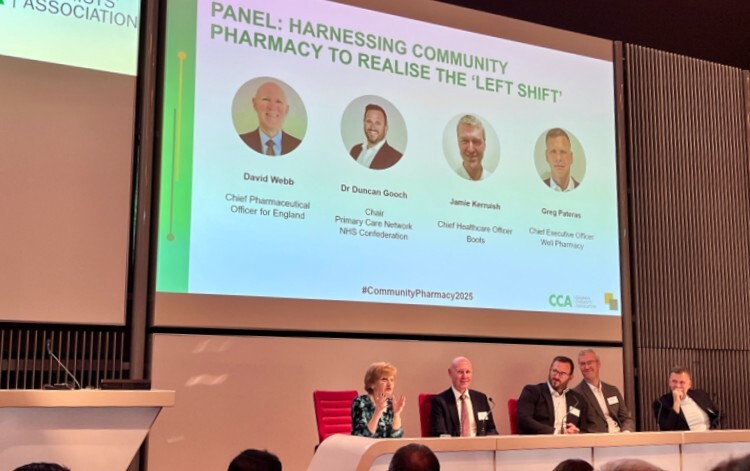
The ‘pivotal role’ of community pharmacy in the neighbourhood health model was highlighted at the Company Chemists’ Association's (CCA) inaugural conference in Westminster yesterday.
NHS England’s group director of primary care Alex Morton highlighted four key areas for ‘quick progress’ including; enabling NHS prescribing in a community pharmacy setting, improving the current clinical services offered by community pharmacists, harnessing new technology, and optimising ordering, prescribing and dispensing systems.
However, she said there were barriers to overcome before community pharmacy could harness this ‘huge opportunity’ such as financial pressures, medicine supply chain issues, and the impact of an ageing population.
Ms Morton also emphasised the need for a collaborative mindset. ‘If there’s one thing that I want you to think about, it’s not just how your services develop but how you can get involved with local services, alongside broader primary care,’ she said at the London event.
Related Article: Pharmacists concerned they will see ‘very little’ of contract funding boost
The message was reiterated during the first panel discussion by chair of the NHS Confederation’s Primary Care Network, Dr Duncan Gooch.
He said: ‘We aren’t going to [succeed] if we keep focusing on our own individual delivery. We have to build relationships and then we can build structure and purpose around that.
‘It also needs to be enabled by large providers, and it needs to be enabled at a regional level as well.’
He added that the sector must ‘play to its strengths’ – the most obvious one being accessibility.
Pharmacists, as opposed to other healthcare providers, are well placed to tackle health inequalities and communities that are otherwise underserved by health provision, he explained.
Their growing role is not just about ‘freeing up GP appointments’ but also about improving access to primary care and the outcomes of the population they serve.
Related Article: Expansion of Pharmacy First a ‘key step’ in delivering preventative care
Some of these issues were echoed by the CCA’s 2025 Prospectus, published yesterday, which proposed expanding Pharmacy First to include a greater number of conditions and commissioning all NHS vaccination programmes for community pharmacy.
However, Greg Paternas, chief executive officer of Well Pharmacy, worried that pharmacy was moving too slowly.
‘I think it’s a sector that feels quite nostalgic. It takes me back to a time when I was eight or nine and going in with my grandmother – the shop looked the same, the technology was the same, the lollipops on the counter are the same’ he said.
Pharmacy has ‘phenomenal opportunity’ he added, but the pace of change is slow. The sector needs to invest in new technology so that pharmacists can transition from being ‘bag-packers’ to advice givers.
Former Conservative health secretary, Jeremy Hunt, also spoke at the event, and described pharmacy as the ‘Cinderella of the NHS’ admitting that the sector needed more resources than he gave then during his time in post from 2012 - 2018.
Related Article: Beyond the scales: reframing eating disorder recognition in primary care
He said that the biggest lesson he learned was that, ‘If you really want problems to be solved quickly, then you have to give people the power to do that locally’ by decentralising the NHS and that he hoped health secretary Wes Streeting would agree.

Have your say
Please add your comment in the box below. You can include links, but HTML is not permitted. Please note that comments are not moderated before publication and the views expressed are those of the user and do not reflect the views of The Pharmacist. Remember that submission of comments is governed by our Terms and Conditions. You can also read our full guidelines on article comments here – but please be aware that you are legally liable for any libellous or offensive comments that you make. If you have a complaint about a comment or are concerned that a comment breaches our terms and conditions, please use the ‘Report this comment’ function to alert our web team.