Government must address AI liability risk for clinicians, experts warn
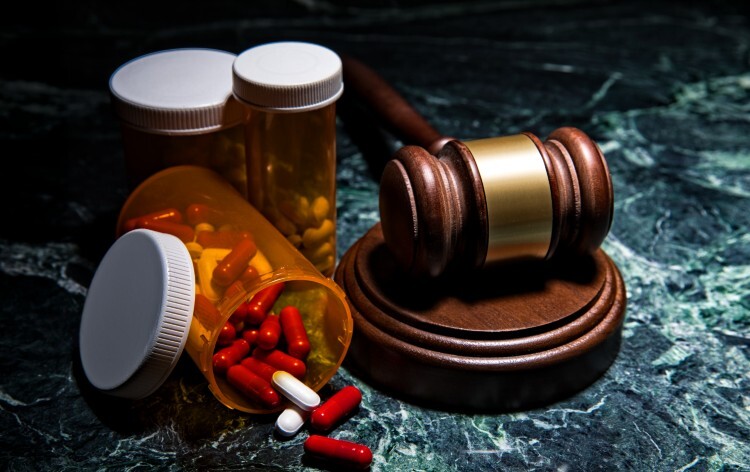
The ‘widening gulf’ between the law and the rapidly evolving use of artificial intelligence (AI) in healthcare must be addressed by the government, the Medical Protection Society urges in a recent report.
The mutual protection organisation has called on the government to introduce legislation that clearly classifies AI systems as products, to distribute responsibility for harm caused by defective systems and protect clinicians from unfair negligence claims.
Their calls come as AI systems become increasingly embedded in UK healthcare – with more than half a million NHS staff recently given access to new AI tools – and as concerns grow over the liability risks faced by clinicians who use them.
Related Article: First AI drug prescriber in US sparks concerns
Foundation chair at the Medical Protection Society, Professor Gozie Offiah, said: ‘AI in healthcare has moved from aspiration to reality. While this brings many exciting opportunities, there is a growing disconnect between the use of AI and the liability framework.
‘This disconnect risks the NHS and clinicians becoming the obvious target for a clinical negligence claim. The Government must act now so the benefits of AI are unlocked, without leaving clinicians and the NHS exposed.’
The Medical Protection Society warns that that under the existing product liability framework, clinicians who use AI systems are at risk of absorbing all legal responsibility if a patient comes to harm, even if harm arises due to a defective AI system.
The report, titled Closing the AI Liability Gap, argues that this is because AI systems are not clearly defined as ‘products’, which means developers, manufacturers and suppliers of AI tools, are likely to be shielded from the liability rules that would usually apply if a defective product caused harm.
The Medical Protection agency highlights that under current UK law, if an AI system produces a bad recommendation and a clinician follows it, the clinician risks bearing the full weight of any resulting negligence claim.
Conversely, the report notes that if a clinician rejects an AI output that later turns out to have been appropriate, they could also face allegations of negligence.
Dr Sarah Townley, deputy medical director at Medical Protection Society, said: ‘The law has always struggled to keep up with technological change. But with AI, the pace of change is so rapid that this gap feels less like a step and more like a widening gulf.
‘AI cannot be governed with the tools of the past. The Consumer Protection Act 1987 was never designed with AI in mind, meaning AI systems will likely fall outside of its scope.
‘As a result, those who develop, manufacture and supply AI systems are likely to be shielded from the liability rules that would usually apply if a defective product caused harm.’
‘Clear, shared liability would not only better protect the NHS and clinicians. It would also build trust and uptake in AI and incentivise developers to prioritise safety from the outset.
‘If the Government is serious about the NHS being a world leader in AI, it must address this issue.’
Related Article: Half a million NHS staff to be given new AI tools to free up time for patients
The Medical Protection agency urges the government to take inspiration from the European Union’s (EU’s) revised product liability directive, which directly addresses AI, and develop legislation that classifies AI systems as products subject to strict liability.
Notably, the report highlights that, under the Windsor Framework, Northern Ireland will be subject to the new EU directive – potentially creating a divergence in AI liability rules within the UK itself.
The report identifies four expected benefits from classifying AI systems as products. First, they report that clearer liability will give clinicians the confidence to adopt AI tools more readily.
Second, the move will incentivise developers to prioritise safety in design and deployment of AI tools. Third, responsibility for harm caused by defective AI systems would be properly distributed across the supply chain rather than defaulting to clinicians.
Lastly, the NHS and healthcare professionals would be protected against the cost of claims when harm arises from a defective AI product.
Roger McMillan, partner and head of the healthcare team at the law firm Carson McDowell LLP, added: ‘Legislative provisions unambiguously defining AI systems as products would provide much needed clarity for developers, software markets and end-users in relation to the legal risks of AI usage.
‘This is particularly important in the healthcare sector, where it is essential that both clinicians and patients can have confidence that there is a clear route to the equitable division of liability, should anything go wrong when AI is used in a healthcare setting.’
Related Article: Pharmacists must meet GPhC standards when using AI
Have your say
Please add your comment in the box below. You can include links, but HTML is not permitted. Please note that comments are not moderated before publication and the views expressed are those of the user and do not reflect the views of The Pharmacist. Remember that submission of comments is governed by our Terms and Conditions. You can also read our full guidelines on article comments here – but please be aware that you are legally liable for any libellous or offensive comments that you make. If you have a complaint about a comment or are concerned that a comment breaches our terms and conditions, please use the ‘Report this comment’ function to alert our web team.