Interview: closing the 9-year gap in endometriosis diagnosis
Endometriosis affects around one in 10 women, yet new data shows that the average time to receive a diagnosis of endometriosis in the UK has now reached 9 years and 4 months – up from 8 years in 2020.
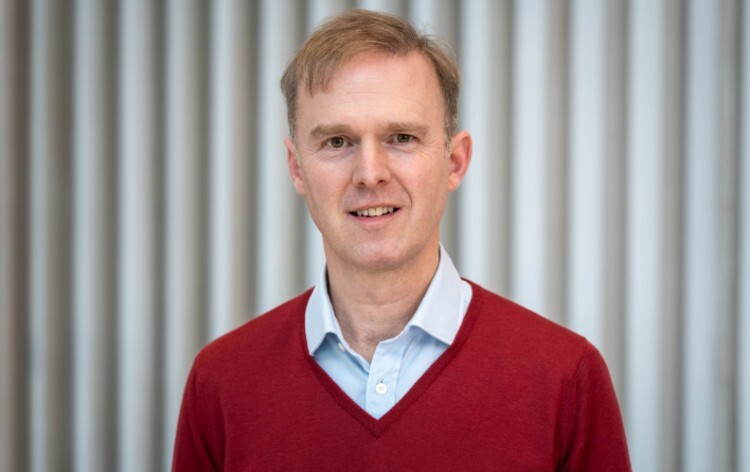
To mark International Women's Day, Dr Andrew Horne, Director of the Centre for Reproductive Health at the University of Edinburgh and president of the World Endometriosis Society, spoke with Cahal McQuillan and discussed what needs to be done in primary care to address this gap, as well as promising developments on the horizon.
Cahal McQuillan (CM): It takes an average of nine years to get endometriosis diagnosed in the UK. What's going wrong, and what can community pharmacists do to help close that gap?
Dr Andrew Horne (AH): There are a number of reasons for the delay in diagnosis. Firstly, lack of awareness amongst the community, in terms of the patients themselves, their family, and their friends, but also a lack of awareness amongst the medical community. That's the first issue.
The second issue is that there isn't a simple diagnostic test for endometriosis, like a blood or a urine test, so it can't be diagnosed quickly, and patients or doctors still rely on a combination of imaging – [which] can only detect certain types of endometriosis – and surgery, so many patients have to undergo a diagnostic laparoscopy before they have a final diagnosis.
In terms of what support community pharmacists could offer. Well one simple thing is [that] they might provide some visual information within their pharmacy about endometriosis.
[But], I think it's largely around awareness. If a patient [presents] to a pharmacy, [then it’s important to have an] understanding of what symptoms might be suggestive of endometriosis. Perhaps signposting them to information about endometriosis – [for example] the Endometriosis UK website or other support organisations – but also empowering them to go and seek help from their GP.
CM: What difference does early diagnosis make for a patient?
Related Article: Beyond the scales: reframing eating disorder recognition in primary care
AH: I always like to think of it going hand in hand with treatment. So, once you have a diagnosis, then you have the appropriate treatment. It's about making sure that patient symptoms are managed appropriately.
So, if a patient is suffering from pain associated with endometriosis, [it’s important to make] sure they have appropriate analgesia or [have started] a treatment. And this is important, because the longer that a patient has pain, the more likely they are to develop more widespread pain. [They can] develop what we call central sensitisation, which is associated with more inflammatory pain, which is much more difficult to manage.
And [also, there’s] what it means to have a label for symptoms. It's clearly very important for patients to understand why they're experiencing a symptom, and I don't think medical practitioners often realise how important that is for patients.
CM: Community pharmacists are often the first point of contact for women with pelvic pain. What are the key symptoms or patterns they should be alert to?
AH: The major symptoms are severe pain around menstruation; pelvic pain outside of menstruation, often with a cyclical component; pain with sex – and that's normally deep pain on penetration; pain opening bowels; pain passing urine; and then slightly vaguer symptoms like lethargy and tiredness, brain fog that can be associated with the condition; and then difficulty getting pregnant in around a third of patients.
The most important word here is cyclical symptoms. So that could be cyclical pelvic pain – and that doesn't necessarily just mean pain around menstruation, because it could be cyclical around ovulation, so in mid-cycle. [Ultimately, it’s a] pain that has a regular pattern to it.
CM: Many women with endometriosis manage significant chronic pain in the community, often for years before diagnosis. What does good pain management look like in that context, and what role do community pharmacists play?
AH: If patients have a kind of daily, almost background pain, it is appropriate to take regular paracetamol – non-steroidal. The challenge is when [patients] get their pain flares and that's when patients maybe need slightly stronger medication.
[In these instances], patients are often prescribed opiates. Opiates can be useful for flares, but if patients continue to take them, they can become dependent on them and they work less well. So, it's about responsible prescribing and then responsible education for the patients about how to take their pain medication.
But of course, there are other ways to support people with pain management. [For example], flagging up websites which might give advice about how to pace if you have chronic pain symptoms, alternative non-pharmacological ways of managing pain symptoms – mindfulness, exercise, yoga, those sorts of things.
CM: Hormonal therapies remain the mainstay of medical management. What do community practitioners need to understand about these treatments, including side effects, adherence challenges, and what patients are commonly worried about?
AH: Hormonal therapies are usually the first-line treatment – either combined oral contraceptives or progestins, for example the mini pill. The important thing with these treatments is they're only effective when they're being taken – so they're not a cure.
Practitioners [must] be aware that not everybody can take oestrogen. Be aware of contraindications to oestrogens such as migraine or past history of venous thromboembolism.
[Additionally], not everybody necessarily wants to take hormones because they're contraceptive, and this is a young population – so it may not be appropriate if it's a patient who's wanting to try and conceive.
Related Article: Sharp rise in diabetes cases prompts call for better postnatal support
There are also cultural considerations. [For example, unmarried women may not be allowed to take contraceptive medicines in some cultures.]
CM: You've been exploring non-hormonal treatments, including drugs repurposed from oncology and cannabinoids. How close are these to clinical practice, and what should community practitioners know about the pipeline?
AH: We've got three non-hormonal approaches that we're pursuing. The first is a treatment that's been repurposed from cancer, which is called dichloroacetate – based on some work that we did where we showed that people with endometriosis have raised levels of lactate within their pelvis, and this is a drug that reduces lactate levels.
We're about to start our first randomised controlled trial of hundreds of patients – a double-blind, placebo-controlled trial.
[In terms of] the cannabinoid treatment, we're about to start a similar-sized double-blind, randomised placebo-controlled trial in two centres in Edinburgh and Aberdeen.
And then the last line of approach is developing an immunotherapy-type treatment that targets a particular type of immune cell called macrophages – that's in the very early stages.
Sadly, it’s quite a long way to go before we get [any of] these into clinical practice.
CM: Are there any other treatments or studies you'd highlight?
AH: There are proteomic blood biomarker tests from Australia and a French salivary microRNA test – a non-invasive diagnostic test – that are looking promising. And then on the imaging side, there are new imaging techniques like PET CT with tracers, which are looking helpful, as well as significant advances in ultrasound technology and training in the use of ultrasound. So that combination of potentially a blood or urinary or saliva biomarker, and better imaging, I think will definitely have an impact on time to diagnosis.
Related Article: Novo Nordisk launch new 7.2mg single-dose Wegovy pen
[In terms of studies looking at] diet and lifestyle, we're part of a big EU consortium across 11 different countries, each looking at [both] in a different way. There's a trial in the Netherlands looking at the impact of diet and cognitive behavioural therapy on endometriosis pain. There's a trial in Italy looking at the impact of diet on infertility.
We're running a big longitudinal cohort study in the UK called ENDO1000, looking at a variety of factors, but [mainly] self-management strategies such as diet – getting patients to record any changes they make on a bespoke app, and then looking in the long term at how that impacts upon the natural history of their symptoms.
A version of this article was first published on our sister title, Nursing in Practice.

Keep your clinical knowledge up to date with The Pharmacist
Extend your learning and record your learning outcomes
Have your say
Please add your comment in the box below. You can include links, but HTML is not permitted. Please note that comments are not moderated before publication and the views expressed are those of the user and do not reflect the views of The Pharmacist. Remember that submission of comments is governed by our Terms and Conditions. You can also read our full guidelines on article comments here – but please be aware that you are legally liable for any libellous or offensive comments that you make. If you have a complaint about a comment or are concerned that a comment breaches our terms and conditions, please use the ‘Report this comment’ function to alert our web team.