Interview: Practice pharmacist Shilpa Patel on collaborative working
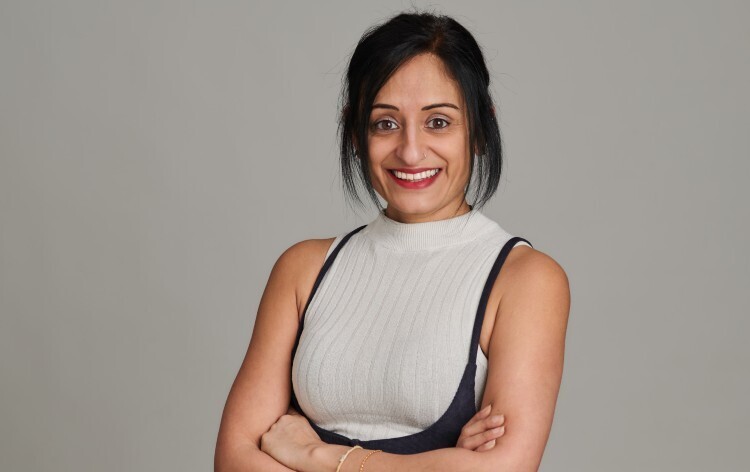
The Pharmacist now has an editorial board to advise and guide our content to ensure we are on point for our readers. Here Emily Warner introduces one of the four members Shilpa Patel, a pharmacist with 25 years’ experience in community and practice.
Emily Warner (EW): What does your job involve?
Shilpa Patel (SP): I am a partner in quite a large GP practice in Brighton, with 25,000 patients. I started off as the main clinical pharmacist there ten years ago, but my role has evolved into doing more process improvement, networking, and finding new income streams. For the last four or five years I have been bringing in new services – for example, we’re currently doing an ADHD diagnosis and treatment service. I will do the training, set it up, run it really well for a few months and then pass it on to someone else.
I feel quite privileged because I’m getting to learn so much and be really involved in anything I want. Our main focus now is the neighbourhood scheme and becoming part of the wider NHS.
EW: How did you end up where you are now?
SP: I started off as a community pharmacist and did a few different things [in that role]. I ran an independent pharmacy for five years where I learned a lot about the business side of things. I did a bit of locum work when I had my kids, for about two or three years. Then I got a job at a Superdrug pharmacy on the high street in Brighton, and I ran that for 10 years – it was a big chunk of my life and that’s where I really became ‘me’.
I never became area manager, but I got to area manager assistant and worked a little bit in the head office. They had a two-year Aspire programme that I did – there were only six people in the country who could do this – and it taught me a lot about business building and got me thinking in a different way. Then I went and did my prescribing course which wasn’t very common at the time and that gave me a whole new lease of confidence.
I thought, I need to do something with this skillset, so I left Superdrug. I was really lucky because as I left, the NHS additional roles reimbursement scheme (ARRS) came out, and the NHS was paying surgeries to take on pharmacists. That’s how I got the job at WellBN, and I just fell in love with it. I’ve been here 11 years.
EW: How does working in a practice compare to working in a community pharmacy?
SP: It’s a completely different job. On paper, you’re a pharmacist in both places but the skills are completely different and it’s a whole different world. You need to know all your drug doses. You need to know NICE guidelines inside out. You need to know the detail. It’s not for everyone.
I was an amazing community pharmacist because I’m very organised and I’m good hitting targets, so when I first came into the practice I didn’t think I was very good; clinically, I didn’t really have the knowledge. I studied so much but in those first two years, I felt like I was retraining, and I didn’t really know what I was doing.
EW: How important is it for pharmacists to be proactive when it comes to upskilling?
SP: In the 15 years I was a community pharmacist, I didn’t upskill very much. In the GP practice, not a day goes by where I’m not having to look something up or read something new. There’s just so much to learn. You also get to work with paramedics and GPs and that’s really interesting as well because it makes you want to know everything.
EW: How can pharmacists collaborate better with GPs?
SP: Every GP practice has got a pharmacist in it now so that should make it easier to collaborate. In ours, we collaborate a lot with our local community pharmacies too but I know they don’t do that with many other surgeries. I think a lot of community pharmacists don’t understand GP practices, so they don’t really know where they can tap into their resources – but I do.
I’m a DPP for the independent prescribing students so I get a lot of community pharmacists come in, and whenever we’re discussing flu jabs, they say ‘we don’t make a lot of profit on flu jabs; we should give up’. I was talking to one community pharmacist who was saying this, and I invited them to come and run their flu jab clinic in our surgery. We set up a room for them, and they came in and jabbed loads of patients – our patients – but all the income was theirs and it was really worthwhile. For us, it looks good because we’re ticking our boxes.
For years, my practice manager used to say the community pharmacists were taking our patients but I think, let’s work together to get them all vaccinated. Whether they’re done by us or them doesn’t matter – we shouldn’t be competing.
EW: What are your thoughts on the 10-year plan?
SP: I think they come out with these plans all the time, and we don't always see anything come out of it. This plan is all about two things: one, there's a lot of effort put into avoiding hospital admission, and two, there's a lot about working as a community, and they're the two things that I'm really focusing on right now.
There's a lot of pots of funding being moved from secondary care into primary care, and unless we prove that we can do something with that, it will just be taken back from us. We're working on a palliative care project at the moment, to look after patients at home rather than sending them to hospital to die. That's the kind of thing the NHS wants us to be involved in, because it will save beds.
And a lot of people aren't getting involved in neighbourhoods because they don't really know what it is and there's no funding there at the moment, so anything they ask us to do is because we want to do it, and not because we’re getting paid to do it.
EW: What advice would you give to a pharmacist who is nervous to step outside their comfort zone?
SP: Just think: have I covered everything? Do I feel competent? Do I feel confident? Within my first year at the surgery, I started signing prescriptions off because I got to a point where I felt like I was the most competent person in the building to do that.
Doctors are really good at diagnosis and supporting the complex needs of patients, but we’re the experts in medication. I never believed that before I joined a GP practice, but I know every check that needs to be done before a patient get their medicines; I know I’ve done all those checks; I know how to speak to a patient, so they understand and therefore I’m the best person to be signing off their prescription. It's about confidence and figuring out where your competencies lie.
I do think a lot of pharmacists are still battling to be respected by the GPs. I would say to them, just leave. If no one's respecting you where you are, there's another surgery down the road where they will respect you.
And the second thing is liaising with community pharmacists, using them to their best ability, and explaining the New Medicine Service (NMS), contraceptive service or Pharmacy First to GPs. That's how I always think of my role: what can I do to ease GPs’ workload?
EW: What are you working on next?
SP: The ADHD stuff is exciting for me right now. Two years ago, I went to the partners and said, ‘I want to get this funded’. They all said it's not possible, but I've been really pushing for it and we've finally got funding.
Last week, we saw our first few ADHD patients and in the next few months, I'm going to be setting up a holistic pathway for them. So, if they get the diagnosis from the GP, they will go through this eight-week program with us which is all about giving them the tools to deal with their ADHD. We’ve got a couple of pharmacists involved in that – one who has just become an acupuncturist – and we have some exciting technology like VR headsets to help patients understand their brain. Then we will put them on medication if they need it. Our aim is to only medicate 50% of the patients we diagnose.
The other thing is I’m working on is opioid deprescribing. I'm really passionate about it and I'm trying to educate other people on how to do that and why it’s so important.
I feel like I've achieved so much in the last 10 years but it's very difficult to know what is next, because every year my career has just gone in a completely different direction – I never could have predicted what would come next. Even now, I'm very open to trying new things and I love change.

Have your say
Please add your comment in the box below. You can include links, but HTML is not permitted. Please note that comments are not moderated before publication and the views expressed are those of the user and do not reflect the views of The Pharmacist. Remember that submission of comments is governed by our Terms and Conditions. You can also read our full guidelines on article comments here – but please be aware that you are legally liable for any libellous or offensive comments that you make. If you have a complaint about a comment or are concerned that a comment breaches our terms and conditions, please use the ‘Report this comment’ function to alert our web team.