Interview: Danny Bartlett on livestream work placements
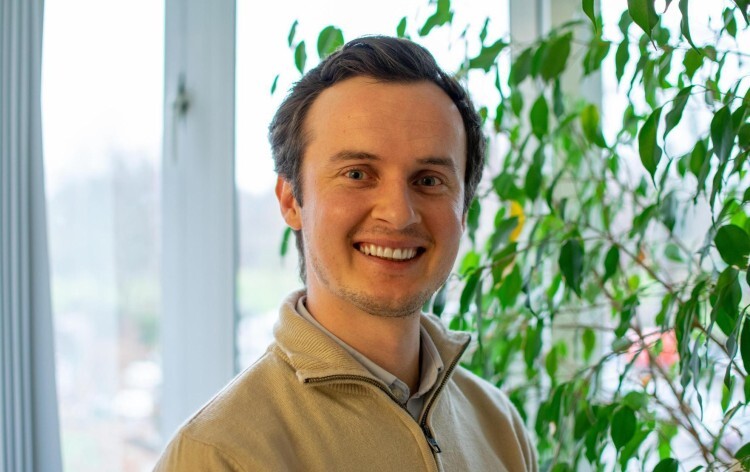
With the first cohort of pharmacist independent prescribers set qualify in 2026, demand for clinical placements is growing and the sector is struggling to keep pace. Yet new technologies – such as stethoscopes with embedded microphones and smart glasses – are allowing clinicians to livestream their consultations for students, revolutionising the way placements are delivered. The Pharmacist’s Emily Warner talks to Danny Bartlett, clinical lead for Kent, Surrey and Sussex Primary Care School, about how these changes are reshaping pharmacy education.
Emily Warner (EW): How do these livestreamed clinical experiences work?
Danny Bartlett (DB): It’s an amazing prospect because a lot of pharmacy students haven’t had the opportunity to do placements – specifically in general practice. And now that all new pharmacists will be prescribers from 2026, there’s going to be an increased need for them to have exposure to prescribing environments like general practice.
There’s not enough space for all the learners and not enough educators, so a variety of different technologies are bridging that gap. One of them involves livestreaming clinical experiences, so the student can watch a general practice consultation without them physically being there.
The main pilot placement we did at Brighton University involved about 74 learners in a room. Then there was a GP in Kent who livestreamed his interaction with two simulated patients. With one patient, he was discussing lipids and cholesterol and statins – the students loved it because they got to see inside the room without having to sit awkwardly behind a GP. It was really, really cool. The advantage of using a simulated patients was that the GP could pause the consultation, turn to the students and have a bit of a debrief.
There are different ways you can set up this kind of technology. You can just set up a webcam and record the consultation with the patient. There are other technologies where you can wear glasses with a camera inside – although that can give you vertigo if the clinician is moving around a lot. There’s also technology where a stethoscope is linked up to a microphone, or an otoscope has a camera built in so you can see into a patient’s ear.
EW: Can the students ask the clinician questions?
DB: Yes, and they did. It was great. We did notice that some of the students were a bit reserved and didn't want to volunteer and ask questions, so we broke it down and said, ‘This table is going to focus on the consultation skills of the GP and see what they think of it. The other table is going to talk about the clinical decision making’. That was a bit more engaging.
EW: Does virtual clinical experience count as placement days for the students?
DB: Yes, it does. You’ve got a GP who is making clinical decisions, showing the students the system that they type into, and other things like that so it does garner clinical tariff. That being said, these simulated placements should be used as a supplement to other placement experiences.
EW: Why is it difficult to find placements in general practice?
DB: It's difficult for all placements but with general practice, there are some space and estates issues. If you imagine a GP consultation room full of four, five, or even six learners, plus the GP and a patient, that's quite overbearing so I think using technology removes that barrier a bit.
Lots of students don't have cars either and they might have a GP practice that wants to take them on placement, but they're in Eastbourne and the student doesn't live anywhere near Eastbourne. So virtual placements might not be for everyone, but it's certainly good when you have, a small, focused group of students who can interact with the GP through a screen. It doesn't have to be a GP either; any healthcare worker can offer this.
EW: How long has this kind of technology been around?
DB: I think it's relatively new. The virtual placement we did at Brighton University was certainly the first pharmacy placement using that technology that I'd encountered. That isn't to say that it doesn't exist elsewhere. Hopefully this is the direction of travel for a lot of educators and learners so they can gain experience in some form, even when they can't find any the old fashioned way.
EW: Are the simulated patients just actors?
DB: Yes, they are actors. You can use real patients as well but obviously there are a few more hoops to jump through to make that happen. I think it depends on the learner, what stage they are at in their degree, and what learning outcomes they’re trying to meet.
Certain students might need a bit more real life experience – for example, students wanting to look in an otoscope to see what an ear infection looks like. You can't really use a simulated patient for that because you need to see someone with an active infection. But for students who have never seen a GP consultation before, a simulated patient is really good because they can see how the GP talks to the patient and things like that.
EW: Do you think this will be particularly useful for students working towards their independent prescribing qualification?
DB: I think so. It can’t replace real life, and it can’t replace students having to speak to patients one-to-one, but I definitely think giving them an awareness of how different prescribers and different clinicians navigate an agenda with a patient is really useful. But it's a tool in the toolbox, as opposed to the one and only thing.
EW: Could it also be useful for students wanting a more niche placement such as prison pharmacy?
DB: Absolutely. You can make it whatever you want. If there’s a neighbourhood team that's formed, and there's a new frailty hub, a clinician could video a consultation in the frailty hub for example.
EW: Do you think attending a simulated placement detracts from the student’s experience?
DB: I think there's advantages and disadvantages. There are certainly students on placement who might feel like they're a spare part and they don't interact with patients – they just sit quietly in the room feeling too nervous to say anything. And those students may feel more comfortable to ask questions in a familiar space. There are going to be other students who want a more hands on experience and want to listen to a patient's chest in person or sit with different people in the practice. It depends on the individual.

Have your say
Please add your comment in the box below. You can include links, but HTML is not permitted. Please note that comments are not moderated before publication and the views expressed are those of the user and do not reflect the views of The Pharmacist. Remember that submission of comments is governed by our Terms and Conditions. You can also read our full guidelines on article comments here – but please be aware that you are legally liable for any libellous or offensive comments that you make. If you have a complaint about a comment or are concerned that a comment breaches our terms and conditions, please use the ‘Report this comment’ function to alert our web team.