No increase to national insurance contributions, Rachel Reeves confirms in Budget
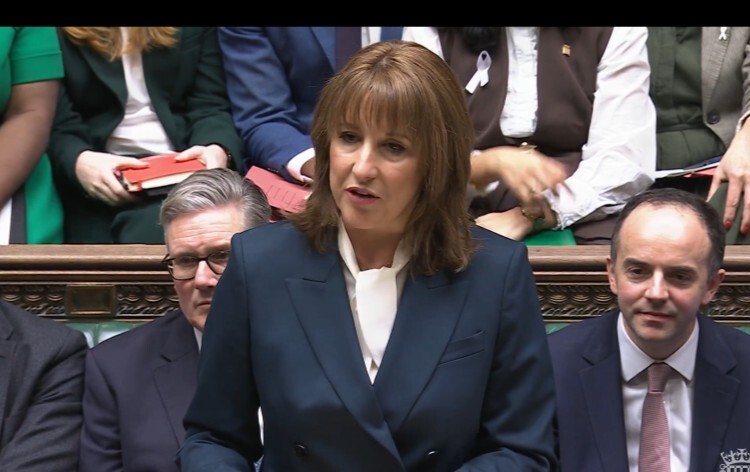
Chancellor Rachel Reeves confirmed that the government will not be increasing National Insurance, rates of income tax or VAT, as she delivered her Autumn Budget to the House of Commons today (26 November).
However, it will be increasing the national minimum wage for 18-20 year olds from £10 to £10.85 per hour, and the living wage from £12.21 to £12.71 per hour.
‘We promised a genuine living wage, and we are delivering it. At the last Budget, I increased the national minimum wage and the national living wage, and I am going the same this year too,’ Ms Reeves said.
However, the National Pharmacy Association (NPA) has said this will make the 'financial mountain' pharmacies face 'even bigger'.
'Pharmacy staff across the country are absolutely deserving of a pay rise, but the increases announced today will add significantly to the financial pressures pharmacies are under as businesses and as a core component of the health service across the UK,' said Henry Gregg, NPA chief executive.
'The Government has promised that reorganising NHS England and other administrative reforms will unlock a billion pounds a year by the end of this parliament. The NPA wants any savings to go straight to the front line of care in our communities, which includes our beleaguered community pharmacies, so patients quickly feel the benefits.'
Related Article: Exclusive: CPE pushes for new service caps to avoid ‘over commissioning’ draining the contract sum
Dr Leyla Hannbeck, CEO and executive chair of the Independent Pharmacies Association added that there was 'very little' in the Budget to help keep pharmacy doors open.
'We urgently need sustainable funding for the pharmacy sector to stabilise services and protect patient access,' she said.
Neighbourhood health
Ms Reeves also committed to investing in 250 new neighbourhood health centres, 100 of which will be opened by 2030. This change – which was announced on 25 November ahead of the Budget – will see ‘more services [expanded] into communities so that people can receive treatment outside of hospitals and get better, faster care where they live’.
These centres will be delivered by a mixture of refurbishments to expand and improve sites over the next three years, and new-build sites that would have more of a medium-term timeline, according to the government announcement.
The commitment to more than 100 of the neighbourhood centres being opened by 2030 follows on from a speech health secretary Wes Streeting made in July, where he aimed for 250-300 centres by 2035, and 40-50 over the course of this parliament.
In terms of the NHS, the focus of the Budget remained on ‘cutting NHS waiting lists’ and although Ms Reeves promised ‘more nurses, more GPs, and more appointments’ she did not mention the pharmacy sector.
In October, Community Pharmacy England (CPE) chair Janet Morrison, pointed out that the government must have a demonstrable impact on the NHS ahead of the next general election, which will measured using several key indicators: waiting times in A&E, waiting times for elective surgery, access to NHS dentistry and access to GP appointments.
She was concerned that several of these indicators focused on hospital services.
Ms Reeves also announced £300m of funding for NHS technology to improve productivity and patient service.
Related Article: Pharmacists concerned they will see ‘very little’ of contract funding boost
And she reiterated the fact that prescription charges will be frozen at £9.90, and three month and annual prescriptions prepayment certificates will also be frozen for 2026/27.
Dr Hannbeck added: 'Whilst we welcome the decision to freeze the NHS prescription charge because it is good news for patients at a difficult time, this fee is simply collected by pharmacies on behalf of the Government and does not reflect the real cost to them of dispensing medicines. Too often, pharmacies are subsidising the difference, which is unsustainable. While the announcement offers support for patients, we now need a funding settlement that properly supports the pharmacies that those patients rely on.'
CCA chief executive Malcolm Harrison said: 'The decision to freeze prescription charges is positive news for patients. However, it must be emphasised that prescription charges in no way benefit pharmacies. Pharmacy teams are required to collect this levy on behalf of the government. Collecting prescription charges creates an additional administrative burden to already-stretched pharmacy teams, who should not have to police and collect what is in effect a health tax on behalf of the government.
'We hope that negotiations will now begin for the 2026/27 contractual framework as soon as possible. Any new settlement must give the sector much-needed clarity and stability.'
Professor Claire Anderson, RPS president, added: 'Today’s budget must be backed by a clear plan to fully utilise the skills of the pharmacy workforce, enabling care to be delivered closer to patients’ homes.
'With the right support and infrastructure, pharmacy teams can further support the priorities of the NHS, expanding access to care in the community and helping release capacity within other parts of the NHS.'
Related Article: Expansion of Pharmacy First a ‘key step’ in delivering preventative care
Details of Rachel Reeve’s Budget were released earlier today in error by the Office for Budget Responsibility (OBR).
The document, which has since been retracted, said: ‘Risks to health spending include the impact on the NHS budget of any further strikes, and the Government’s negotiations for the US trade deal on the cost of pharmaceutical spending within the NHS.’

Have your say
Please add your comment in the box below. You can include links, but HTML is not permitted. Please note that comments are not moderated before publication and the views expressed are those of the user and do not reflect the views of The Pharmacist. Remember that submission of comments is governed by our Terms and Conditions. You can also read our full guidelines on article comments here – but please be aware that you are legally liable for any libellous or offensive comments that you make. If you have a complaint about a comment or are concerned that a comment breaches our terms and conditions, please use the ‘Report this comment’ function to alert our web team.