Whole-population prostate cancer screening not recommended by NSC
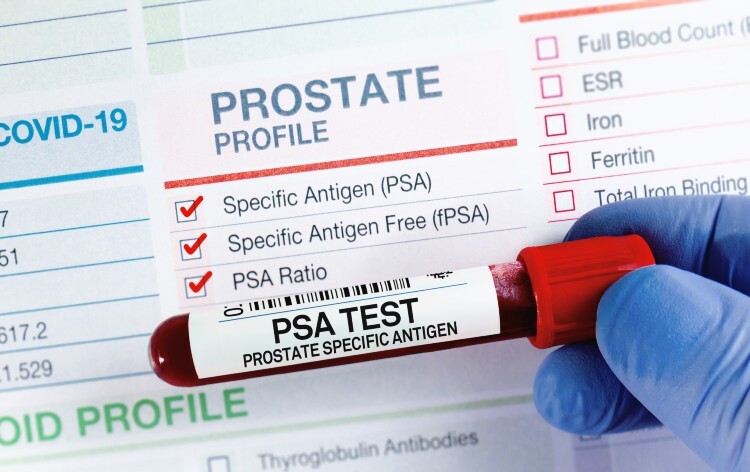
The UK National Screening Committee (NSC) has advised against whole-population routine NHS prostate cancer screening – recommending instead a ‘targeted screening programme’.
The final recommendation, published yesterday, proposed a targeted screening programme every two years for men aged 45 to 61 who have a pathogenic BRCA2 variant with a family history of breast, ovarian, pancreatic, or prostate cancer.
It said that the best method of identifying and inviting this high-risk group for screening ‘should be evaluated over time’.
The committee concluded that screening is ‘more likely to cause more harm than good’ in the whole population and in men with a family member who has had breast, ovarian or prostate cancer but who do not have a BRCA2 variant.
The main harms of screening include incontinence and erectile dysfunction (impotence) following unnecessary biopsy or treatment, the committee said.
Based on a review of evidence into prostate cancer screening, a modelling study and consultation with stakeholders, the committee said it:
- Does not recommend population screening for this condition;
- Recommends a targeted screening programme, involving PSA testing every 2 years, for men aged 45 to 61 who have a pathogenic (able to cause disease) BRCA2 variant with a family history of breast, ovarian, pancreatic, or prostate cancer;
- Recommends that the best method of identifying and inviting the above high-risk group should be evaluated over time;
- Does not recommend targeted screening for any other risk groups; and
- Will continue to work closely with UK researchers, including the TRANSFORM trial, to address uncertainties in the evidence regarding targeted screening of black men and other risk groups.
The UK NSC said: ‘For black men, there is ongoing uncertainty as to whether screening would cause more good than harm.
‘The main harms of prostate cancer screening include incontinence and erectile dysfunction in men who do not need treatment.
‘The UK NSC is hopeful that new evidence, new tests and a better understanding of prostate cancer will support much wider screening in the future.’
In November last year, the committee had already said in a draft recommendation that it was set to advise against routine NHS prostate cancer screening.
The positive recommendation for screening men with a BRCA2 gene variant is slightly more restrictive that the draft recommendation, which also included screening men with a BRCA1 variant.
The change was made after discussions with geneticists using published evidence and risk which concluded that people with a BRCA1 variant are not at a sufficiently elevated risk to suggest that benefits of screening would outweigh the harms, the committee said.
Currently, any man aged over 50 can request a PSA test from their GP, but the NSC previously said it does not recommend a screening programme as the test is ‘not accurate enough to detect prostate cancer that needs treatment’.
The committee had last examined the body of evidence in 2020, recommending against introducing a national screening programme as, at that time, ‘the potential harms outweighed the benefits’.
However, it came under increased pressure last year to reconsider PSA testing policy, particularly after Sir Chris Hoy’s announcement that he had been diagnosed with terminal cancer.
RCGP president Professor Victoria Tzortziou Brown said: ‘The NSC’s decision not to recommend population-wide prostate cancer screening reflects the current limitations of PSA testing in identifying cancers that require treatment.
‘We note the recommendation for targeted screening of men aged 45–61 with a BRCA2 mutation, and while we agree that a targeted approach is likely to be most appropriate, identifying all eligible men may prove challenging so, we look forward to hearing more details on how this will be facilitated.
‘GPs want better outcomes for patients with prostate cancer, and we welcome ongoing research – including the Transform Trial – into more accurate tests. Any future developments in screening must be guided by strong evidence of patient benefit.’
Prof Hashim Ahmed, Professor of Urology at Imperial College London, said: ‘The NSC final recommendation following the period of consultation reinforces what the data has consistently shown – that currently the harms unfortunately outweigh the benefits of population level screening for most high-risk groups and the population as a whole.
‘The need for robust data is ever more pressing across all groups of men. The NIHR and Prostate Cancer UK funded TRANSFORM study will be critical to fill the evidence gaps that the NSC have identified.
‘TRANSFORM will hopefully show that we can reduce the harms of over-diagnosis, over-treatment and treatment-related side-effects, but also address the harms of late diagnosis that leads to thousands of men suffering the ill effects of cancer that has spread and thousands still dying of the disease every year.’
But Simon Grieveson, assistant director of research at Prostate Cancer UK said: ‘We are deeply disappointed with this final recommendation from the UK NSC which scales back even further from their initial findings.
‘We recognise there is still not enough evidence to support screening for all men at risk, however Prostate Cancer UK is rigorously scrutinising the evidence behind today’s decision and will challenge it where we disagree, as, if accepted by the Government, the programme may only screen a few thousand men each year.’
A version of this article was first published on The Pharmacist's sister title, Pulse.

Keep your clinical knowledge up to date with The Pharmacist
Extend your learning and record your learning outcomes

Have your say
Please add your comment in the box below. You can include links, but HTML is not permitted. Please note that comments are not moderated before publication and the views expressed are those of the user and do not reflect the views of The Pharmacist. Remember that submission of comments is governed by our Terms and Conditions. You can also read our full guidelines on article comments here – but please be aware that you are legally liable for any libellous or offensive comments that you make. If you have a complaint about a comment or are concerned that a comment breaches our terms and conditions, please use the ‘Report this comment’ function to alert our web team.