Community pharmacy should be recognised as a ‘core self-care partner’
Community pharmacy should be recognised as a 'core self-care partner' to support the delivery of the government’s NHS reform ambitions, a new report has said.
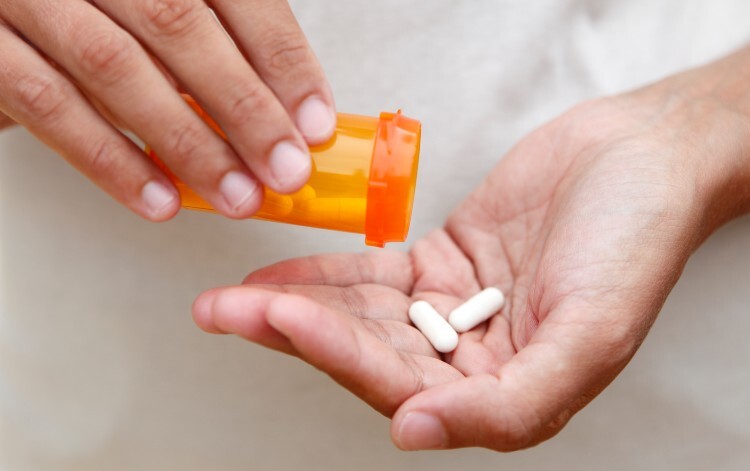
Consumer healthcare association PAGB said that self-care through over-the-counter (OTC) medicines saves the NHS an estimated £6.4 billion a year from avoided prescription and appointment costs.
It added that supporting more people to self-care where appropriate could reduce 25 million GP appointments and five million A&E visits each year for self-treatable conditions.
PAGB's new report said that self-care has the potential to support delivery of the government’s 10-Year Health Plan ambitions for prevention, neighbourhood health and NHS productivity as well as economic growth.
Yet despite its contribution, self-care remains 'under-recognised and underutilised' within national health policy, the association warned.
Related Article: Three-quarters of men do not discuss their health with pharmacists, report finds
The report said: 'Empowering the public to self-care is therefore an important part of prevention and improving people’s health and wellbeing.
'It is also key to reducing demand on the wider healthcare system. When people are equipped to manage minor illnesses appropriately – recognising self-treatable conditions, using OTC medicines effectively and knowing when symptoms warrant clinical attention – they use services more proportionately, accessing the right care at the right time, in the right place.'
Self care plays a critical role in keeping people healthy, in work and in education, with 96% of the population experiencing at least one self-treatable condition each year, and 43% experiencing more than four, PAGB said.
PAGB's The self-care opportunity: a roadmap for NHS reform report sets out four key enablers for increasing the use of self-care, including embedding it into the wider health system by integrating community pharmacy into neighbourhood health service design.
This includes incorporating self-care and community pharmacy into prevention pathways, neighbourhood health, NHS productivity plans and life sciences strategy.
The association said one of the immediate priorities for integrated care boards (ICBs) should be establishing ‘clear and joined-up’ referral and feedback processes between community pharmacy, general practice and wider neighbourhood services.
The report added: ‘Self-care should be embedded within care pathways, commissioning frameworks and clinical navigation, ensuring it is a recognised and resourced part of how care is delivered.
‘Community pharmacy should be recognised as a core self-care partner, with clear referral routes and support to enable delivery at scale.’
The PAGB report said that because community pharmacies are 'highly accessible' they are well-placed to support people to manage their minor illnesses by providing self-care advice on the use of OTC medicines or escalate to clinical care where appropriate.
Related Article: CPE elects new regional representative with ‘frontline experience’
It added: 'As set out in the 10YHP [10-Year Health Plan] and the government’s Neighbourhood Health Framework, community pharmacy is set to play a particularly important role within neighbourhood health delivery.
'However, to truly embed self-care in neighbourhood health delivery, policies must go beyond prioritising community pharmacy’s clinical service role and first recognise the role of pharmacy in supporting people to self-care.'
PAGB’s self-care census also showed that consumer confidence in self-care is declining, with people’s confidence to manage a common cold themselves falling from 81% in 2023 to 63% in 2025.
To tackle this PAGB said that the government must invest in health literacy and to work with community pharmacy to develop self-care content for the NHS App, including signposting to OTC products.
The other key enablers PAGB's report sets out in order to ensure self-care becomes an active component of NHS reform are:
- Prioritising self-care in policy and decision-making;
- Improving access to trusted self-care info and digital support; and
- Accelerating prescription-only medicines (POM) to OTC reclassification to support self-care.
In the future, PAGB said it hopes to see the UK establish a ‘world-leading reclassification’ environment, with a sustained pipeline of POM-to-OTC switches supporting prevention, self-care and access to medicines.
Related Article: New podcast: Janet Morrison on the highs and lows of pharmacy contract negotiations
Michelle Riddalls, chief executive at PAGB, said: ‘We are delighted to host this parliamentary drop-in, shining a light on the vital role of self-care and the opportunity to support its wider adoption across the health system.
‘As the government and NHS look to continue with the delivery of the 10-Year Health Plan, now is the time to prioritise self-care and maximise its role in prevention, neighbourhood health delivery and productivity.’
Have your say
Please add your comment in the box below. You can include links, but HTML is not permitted. Please note that comments are not moderated before publication and the views expressed are those of the user and do not reflect the views of The Pharmacist. Remember that submission of comments is governed by our Terms and Conditions. You can also read our full guidelines on article comments here – but please be aware that you are legally liable for any libellous or offensive comments that you make. If you have a complaint about a comment or are concerned that a comment breaches our terms and conditions, please use the ‘Report this comment’ function to alert our web team.