ICBs told to introduce pharmacy prescribing services in 2026/27
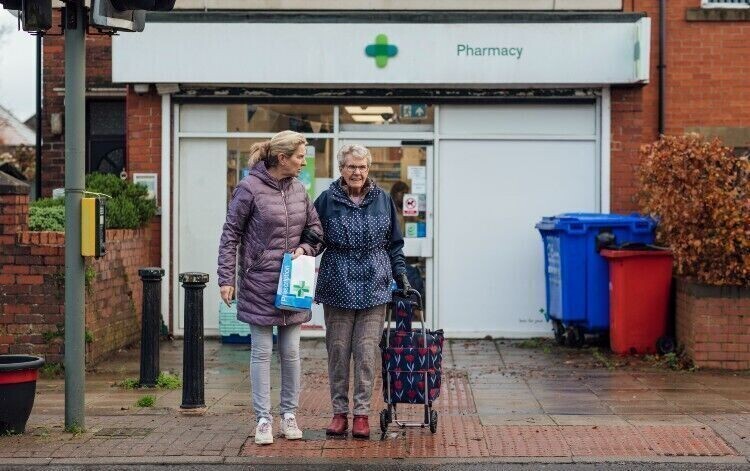
NHS England will ‘maximise’ the role of community pharmacy by embedding ‘pharmacy-first’ approaches and introducing prescribing-based services, according to its new planning framework.
The new blueprint sets out ‘medium term’ planning for the health service in 2026/27 to 2028/29 and has been described as the ‘most ambitious plan the NHS has published in a generation’.
It sets out its ambitions to ‘increase the role’ of community pharmacies and provides a list of actions to be taken by integrated care boards (ICBs) to achieve this.
This includes that ICBs must ‘introduce prescribing-based services into community pharmacies during 2026/27’ and ‘embed pharmacy-first approaches, ensuring that local commissioning discussions utilise available pharmacy capacity to support primary care pressures’.
The Pharmacist is seeking more information about what these prescribing-based services will include, and how they will impact both ICBs and community pharmacists.
During the Labour Party’s most recent election campaign, its manifesto committed to creating a Community Pharmacist Prescribing Service, which would see more pharmacists gain and make use of independent prescribing rights.
Related Article: New MHRA and FDA liaison programme announced
In March, the now newly-elected chair of the All-Party Parliamentary Group (APPG) on Pharmacy, MP and pharmacist Sadik Al-Hassam, suggested that a community pharmacist prescribing service could launch ‘in two or three years’.
As part of the new NHS England planning framework, ICBs have also been asked to ‘continue developing’ relationships between general practice and community pharmacy to ‘support access to pharmacy services’.
This comes as pharmacy leaders have recently issued a united defence of the Pharmacy First service after what they described as ‘sneering’ remarks from some GP representatives about pharmacists’ clinical skills.
The Medium Term Planning Framework also said that ICBs must ‘maximise use of the Discharge Medicines Service to reduce medicines harm and readmissions’ and ‘expand access to emergency contraception through community pharmacies’.
It also says ICBs should 'ensure all community pharmacies have fully enabled the capability for patients to track their prescription status using the NHS App, and transition all messaging to NHS Notify, using
NHS App-based ‘push’ notifications as the default option'.
Shveta Suri, head of pharmacy productivity for Derby and Derbyshire ICB, said: 'The ability to track prescriptions via the NHS app could reduce administrative burden for practices and improve patient experience. This could also help us become a greener NHS, as NHS App-based messaging could be cheaper than sending a letter or text message.'
She added that pharmacists must work together to address barriers within the current IT infrastructure to enable seamless healthcare. 'It's exciting to see a push towards ensuring all patients are enabled to use digital methods - so long as we continue provide parallel support those who may be "digitally excluded",' she said.
In a foreword from health secretary Wes Streeting and NHS England chief executive Sir James Mackey, they said the framework was ‘the most ambitious plan the NHS has published in a generation’ and would ‘return the NHS to much better health’.
Chief executive of the Company Chemists’ Association (CCA) Malcolm Harrison said he welcomed the publication and was ‘encouraged’ by plans to introduce prescribing-based services.
Related Article: Asda Pharmacy launching ‘judgement-free’ disposal scheme for unregulated medicines
However, he said it was ‘vital that there is clarity’ on the availability of designated prescribing practitioners (DPPs).
‘In order for patients to have a consistent level of service across the country, the CCA would like to see a national framework for a prescribing service, ensuring equitable access for patients nationwide,’ said Mr Harrison.
He added: ‘Community pharmacies are uniquely placed to provide a first port-of-call service for routine primary care, improving access for patients, reducing waiting times, and reducing pressures and freeing up capacity in other parts of the NHS.
‘The success of the Pharmacy First service has already demonstrated the transformative potential of pharmacy-led care.
‘The framework’s call to embed pharmacy-first approaches is a clear signal that community pharmacy is part of the way forward in delivering accessible, timely and local care.’
Similar aspirations for community pharmacy were laid out in the recently published 10-year health plan, which aspired to ‘increase the role of community pharmacy in the management of long-term conditions and complex medication regimes’.
The end goal is to transition community pharmacy from being largely focused on dispensing medicines to becoming integral to the government’s new Neighbourhood Health Service plans.
Related Article: Thousands of GP appointments freed up through joint working with community pharmacy
However, as community pharmacy contractual framework (CPCF) negotiations approach, Janet Morrison, chief executive of Community Pharmacy England (CPE), has warned pharmacy leaders to prepare for ‘hard choices’.
Speaking at the Pharmacy Show earlier this month, Ms Morrison said she had recently spoken with pharmacy minister Stephen Kinnock who warned about ‘the gloomy outlook’ ahead of next pharmacy contract negotiations.
And Olivier Picard, chair of the National Pharmacy Association (NPA), said community pharmacies were currently ‘squeezed dry’ and lacked the capacity to provide additional services, without more government funding.

Have your say
Please add your comment in the box below. You can include links, but HTML is not permitted. Please note that comments are not moderated before publication and the views expressed are those of the user and do not reflect the views of The Pharmacist. Remember that submission of comments is governed by our Terms and Conditions. You can also read our full guidelines on article comments here – but please be aware that you are legally liable for any libellous or offensive comments that you make. If you have a complaint about a comment or are concerned that a comment breaches our terms and conditions, please use the ‘Report this comment’ function to alert our web team.