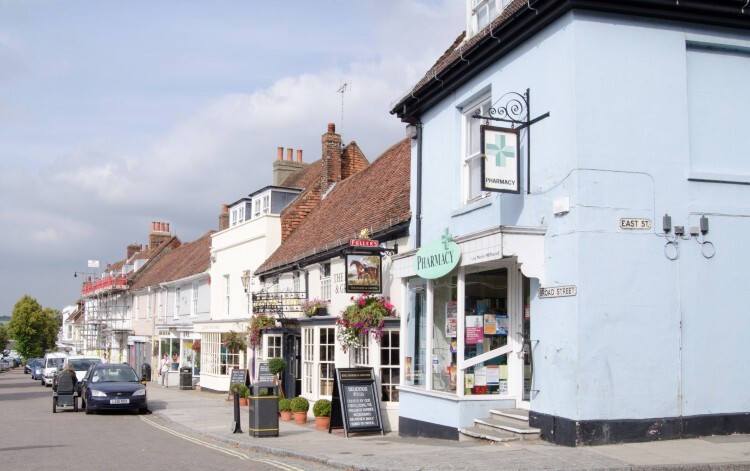
Community pharmacies are ‘lifelines’ for people in rural areas and can be ‘more practical’ than having a GP surgery, MPs have said.
MPs highlighted the importance of rural pharmacies and raised concerns over the impact of potential closures during a parliamentary debate on 4 March.
North West Leicestershire, MP Amanda Hack, described rural pharmacies as ‘lifelines’ for her constituents.
Related Article: Travellers beware: what pharmacists need to know about global travel
The Labour MP told the Westminster Hall debate on healthcare in rural areas: ‘If a rural pharmacy is facing a shortage or does not open as frequently, that can have a detrimental impact.
‘In a city, people can pop along the road to the next nearest pharmacy. Castle Donnington, which has the highest rate of asthma in my constituency, has just one pharmacy. It does an amazing job for my constituents, but the next nearest pharmacy is more than five miles away.
‘The isolation of our pharmacies has a detrimental impact in a rural area, because there is simply nowhere else to go.’
Katie Lam, Conservative MP for Weald of Kent, said it was ‘more practical’ to have a pharmacy in a village than a GP surgery.
And Gregory Stafford, MP for Farnham and Bordon, said: ‘For villages and small towns, the local pharmacy is not a luxury; it is a frontline health service.'
The Conservative politician added that since 2024 more than 200 pharmacies have shut in England, and in the first three months of 2025 alone, 31 medium-sized and 24 large pharmacy branches closed.
Related Article: Drug price concessions hit record high for third consecutive month
Ms Hack said: ‘When patients cannot access their medicines promptly, their conditions can worsen. They will turn to a GP for urgent appointments or to their nearest A&E.
‘Pharmacy provision can provide us with an invaluable capacity for our entire healthcare system, the rural services of which have been hit the hardest.’
In response, health minister Stephen Kinnock recognised that neighbourhood services would need to look different across rural and urban areas.
‘That is why their delivery will be locally led, with local systems determining how neighbourhood health is designed for their area. That work will start in the areas of greatest need, including rural towns and villages,’ he said.
Related Article: Exclusive: CPE pushes for new service caps to avoid ‘over commissioning’ draining the contract sum
Zoe Long, director of communications, corporate and public affairs at Community Pharmacy England (CPE), said:
‘[This] parliamentary debate rightly recognised that pharmacies provide vital access to healthcare in their communities but also served to highlight how long-term underfunding is putting critical services at risk. It is good to see this kind of cross-party support for the sector continuing.’

Have your say
Please add your comment in the box below. You can include links, but HTML is not permitted. Please note that comments are not moderated before publication and the views expressed are those of the user and do not reflect the views of The Pharmacist. Remember that submission of comments is governed by our Terms and Conditions. You can also read our full guidelines on article comments here – but please be aware that you are legally liable for any libellous or offensive comments that you make. If you have a complaint about a comment or are concerned that a comment breaches our terms and conditions, please use the ‘Report this comment’ function to alert our web team.