Better to prevent obesity than use weight loss drugs, chief medical officer warns
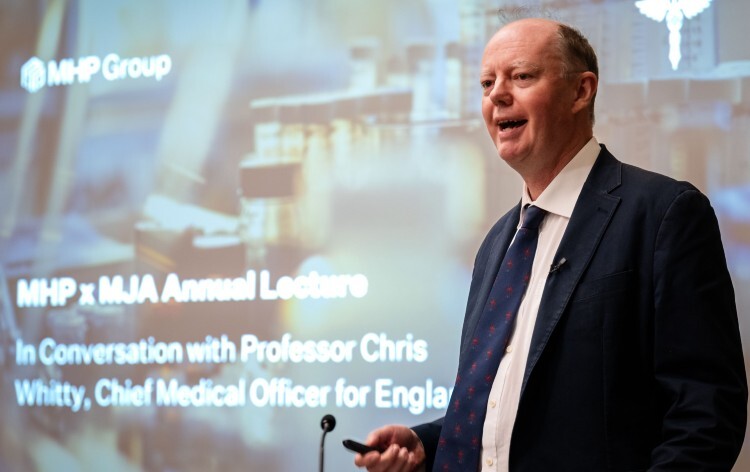
Preventing obesity is ‘overwhelmingly better’ than allowing rates to rise and putting people on weight loss drugs, England’s chief medical officer has said.
Professor Sir Chris Whitty also said that if a high proportion of the population were using weight loss drugs it would be a ‘societal failure’.
He told the Medical Journalists’ Association annual lecture in London yesterday evening that he did not think giving up on public health interventions which are known to work in children and relying on drugs to ‘get us out of a hole’ was a socially or medically acceptable answer.
Prof Whitty added: ‘We know lots of things we could do to make sure that the obesity doesn’t happen in the first place.
‘That is overwhelmingly better than actually allowing completely open eyed obesity rates to go up in children and young adults, and then putting people on drugs, the long term effects of which we don’t know, and which coming off can have problems.
Related Article: Warnings for ACE inhibitor side effects strengthened by MHRA
He added: ‘Really, is our answer to say, give up on the public health, which we know will work in children and then just rely on drugs to get us out of a hole.
‘I do not think that is a socially acceptable answer. Actually, I don’t think that’s a medically acceptable answer, because these drugs are not benign, GLP-1s.’
Prof Whitty highlighted that while GLP-1s are ‘very good drugs’, there are a lot that is not known about them.
He said what is known is that when these ‘first generation’ of drugs are stopped, the weight taken off returns. He also described the ‘unpleasant side effects’ large numbers of people can have – mostly gastrointestinal – as well as highlighting that very small numbers have had bad reactions.
Prof Whitty told delegates that some people will always need weight loss drugs, but this should be a ‘very small minority’.
However, Prof Whitty added: ‘It should be a very small minority, if it’s a high proportion of the population, particularly in areas of deprivation, not in areas of affluence, I think that is a societal failure, and just relying on the drugs seems to be the wrong answer.’
He said that there are lots of things that can be done to make sure that obesity does not happen in the first place.
Related Article: Adjuvanted trivalent flu vaccine approved for over 50s
In his speech, Prof Whitty also spoke of the ‘shocking’ and widening gap in obesity rates between children living in the most and least affluent areas.
He said that in the most deprived areas, the rates of obesity ‘are running at about 30% by the time people get to about 10 years old’.
The UK government’s chief medical adviser said that this is ‘setting them up to fail over a lifetime’, because of the difficulty to lose that weight without drugs or surgery.
Prof Whitty said he worries about the long-term consequences of obesity, including cancer, cardiovascular disease, diabetes and infectious diseases.
Prof Whitty said it would be ‘shocking’ to allow obesity rates to rise due to ‘aggressive’ marketing of weight-inducing foods.
Related Article: ‘Most severe’ medicine shortages ever pose serious patient safety risk, health leaders warn
Speaking to the audience of health journalists and industry leaders, he added: ‘Does anyone in this group believe that the correct answer is, allow obesity to rise because of marketing, pretty aggressive marketing, obesogenic foods for children, and then stick them on GLP-1 agonists at the age of 18.
‘If you do believe that, I would like you to explain that position, because I think it is shocking if that’s where we end up.’
A version of this story first appeared in The Pharmacist's sister title Healthcare Leader.


Have your say
Please add your comment in the box below. You can include links, but HTML is not permitted. Please note that comments are not moderated before publication and the views expressed are those of the user and do not reflect the views of The Pharmacist. Remember that submission of comments is governed by our Terms and Conditions. You can also read our full guidelines on article comments here – but please be aware that you are legally liable for any libellous or offensive comments that you make. If you have a complaint about a comment or are concerned that a comment breaches our terms and conditions, please use the ‘Report this comment’ function to alert our web team.