Boots campaign raises awareness for skin disease of the neck
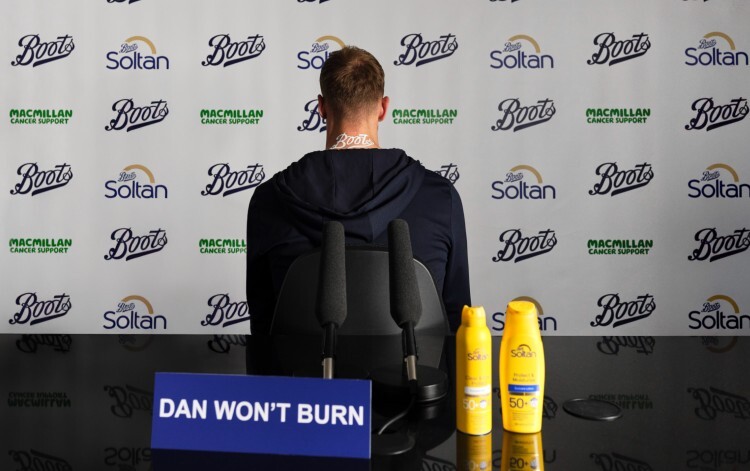
England footballer Dan Burn is supporting a Boot’s campaign to raise awareness around protecting the back of the neck from the sun to prevent skin disease.
Men are three times more likely to develop melanoma on the neck and scalp than women and account for around 80% of all new cases of melanoma on the neck each year, NHS England data shows.
New research by Boots also reveals that 80% of adults have burnt the back of their neck – a ‘major sun safety gap’ according to the retailer - in the past, with one-in-five (21%) saying that it happens every year or more.
Related Article: HPV vaccine reduces risk of cervical cancer death to 'close to zero'
To tackle the issue, the health and beauty retailer has launched the social media campaign ‘Dan Won’t Burn’ to remind people to apply sunscreen to the back of their neck and encourage better sun protection.
England defender Dan Burn said: ‘As a defender, I know how important it is to cover every angle, but I’ll admit the back of my neck isn’t always part of my game plan. It’s an easy area to miss, but one that’s vulnerable to sun damage.
‘I’m proud to be teaming up with Boots this summer to help raise awareness of this important issue.’
The campaign comes after the government published an update on the risk of using sunbeds, building on the 13th Committee on Medical Aspects of Radiation in the Environment (COMARE) report from 2009 which considered the topic in detail.
The 2009 report estimated that sunbeds could result in around 100 deaths from melanoma each year in the UK.
Related Article: Novel flu and coronavirus infections remain greatest health security threats
The new update says: ‘The overall picture of health effects from UV radiation and the contribution made by sunbed use has not changed substantially since the publication of the 13th COMARE report.’
It added that current sunbed usage in the UK is not very different from 30 years ago, and the number of commercial sunbed outlets in the UK has not declined significantly since 2009 despite the introduction of laws to control use.
Considering the new evidence on sunbeds published since 2009, the report recommended that:
- Further regulation of the commercial use of sunbeds should be considered, addressing inconsistencies between requirements in the four nations;
- Government should consider a total ban on the commercial use of sunbeds; and
- Public information campaigns are an ‘essential’ accompaniment to any initiatives to control sunbed use.
It also identifies several research priorities to understand the best way to control sunbed use.
Related Article: Warnings for ACE inhibitor side effects strengthened by MHRA
This includes evaluating risk by age, sex and skin type as well as considering the impact of medication with phototoxic potential on skin cancer risk – such as some antihypertensives, antidepressants and antibiotics.
In particular, the European Medicines Agency (EMA) and United States Food & Drug Administration (FDA) have introduced skin cancer risk labelling for hydrochlorothiazide.

Keep your clinical knowledge up to date with The Pharmacist
Extend your learning and record your learning outcomes
Have your say
Please add your comment in the box below. You can include links, but HTML is not permitted. Please note that comments are not moderated before publication and the views expressed are those of the user and do not reflect the views of The Pharmacist. Remember that submission of comments is governed by our Terms and Conditions. You can also read our full guidelines on article comments here – but please be aware that you are legally liable for any libellous or offensive comments that you make. If you have a complaint about a comment or are concerned that a comment breaches our terms and conditions, please use the ‘Report this comment’ function to alert our web team.